Best Shopify Customer Service Apps 2026 (Tested & Ranked)
Best Shopify Customer Service Apps 2026 (Tested & Ranked)
Best Shopify Customer Service Apps 2026 (Tested & Ranked)
The best Shopify customer service apps in 2025 fall into two categories:
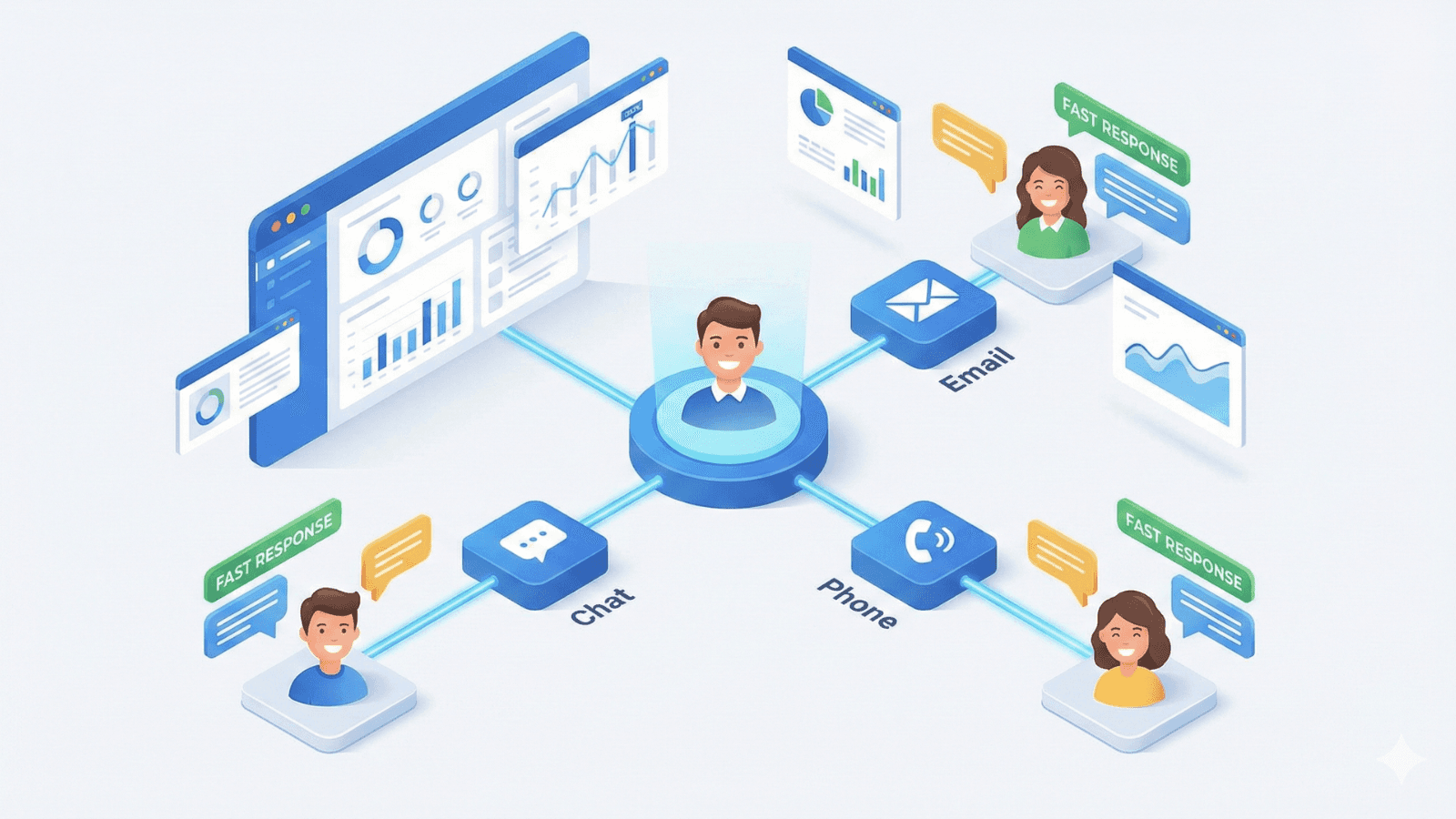
Helpdesks (for managing tickets):
Gorgias - Best for Shopify-native integration
Zendesk - Best for enterprise scale
Tidio - Best for budget stores
Richpanel - Best for self-service portals
Ticket Prevention (for reducing tickets):
Revize - Best for order editing self-service
Shopify Inbox - Best free option
HelpCenter - Best for FAQ builders
AfterShip - Best for tracking inquiries
The smartest approach: Use both. A helpdesk handles unavoidable tickets while self-service tools prevent the rest.
Table of Contents
Why Customer Service Apps Matter (Especially During BFCM)
The Two Types of Customer Service Apps
Best Helpdesk Apps for Shopify
Best Ticket Prevention Apps for Shopify
The #1 Support Ticket Category
How to Choose the Right Customer Service Stack
ROI Calculator: What Support Tickets Actually Cost
Complete Comparison Table
FAQ
Why Customer Service Apps Matter (Especially During BFCM)
Here's a number that keeps Shopify merchants up at night: 67% of customers will leave a brand after just one bad support experience.
Now multiply that by Black Friday Cyber Monday volume.
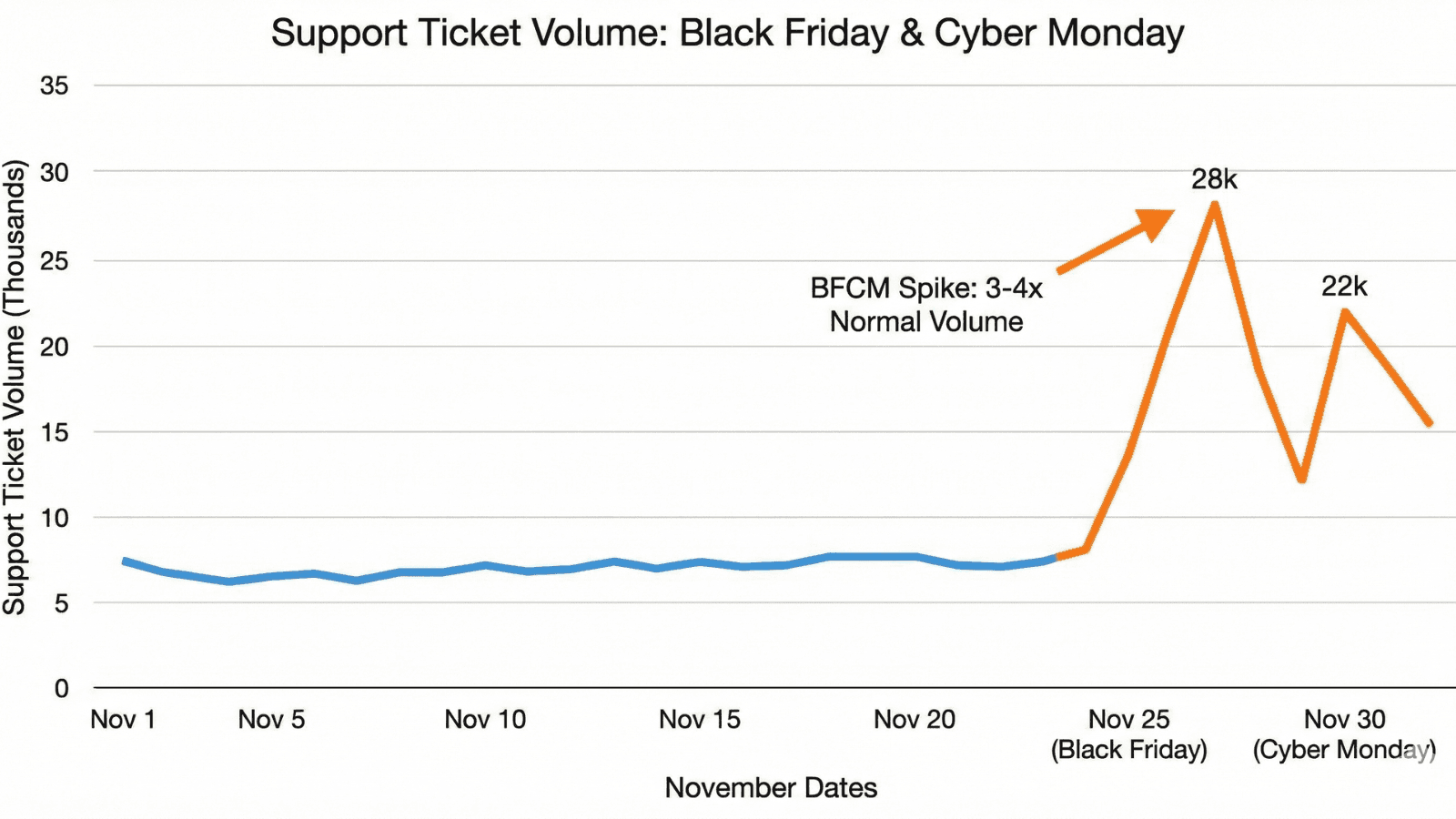
During BFCM, the average Shopify store sees a 3-4x spike in support tickets. The usual culprits:
"Where is my order?" (tracking inquiries)
"I need to change my shipping address" (order modifications)
"I forgot to add my discount code" (post-purchase requests)
"Wrong size/color, need to exchange" (order changes)
"How do I return this?" (returns inquiries)
Most merchants respond by hiring seasonal support staff. But here's the problem: new agents take 2-3 weeks to train properly. By the time they're effective, BFCM is over.
The smarter solution? Reduce ticket volume in the first place.

This is where the right customer service stack makes all the difference. The best Shopify stores don't just have great helpdesks—they prevent 40-60% of tickets from being created at all.
The Two Types of Customer Service Apps
Customer service apps fall into two distinct categories:
Category 1: Helpdesks (Ticket Management)
Helpdesks are the traditional customer service solution. They:
Centralize conversations from email, chat, social, and phone
Assign tickets to agents
Track response times and SLA metrics
Provide macros and templates for common responses
When you need a helpdesk: When tickets are unavoidable (complex issues, complaints, custom requests).
The limitation: Helpdesks manage tickets, they don't prevent them. You're still paying agents to handle every inquiry.
Category 2: Ticket Prevention (Self-Service)
Ticket prevention apps let customers solve their own problems. They:
Enable order modifications/ order edits without contacting support
Provide instant answers through FAQ builders
Automate tracking updates
Allow self-service returns and exchanges
When you need ticket prevention: When the same repetitive requests drain your support team.
The advantage: Customers get instant resolution (better experience) while you save on support costs (better margins).
The winning strategy: Use both. A helpdesk catches what falls through the cracks. Ticket prevention ensures fewer things fall through in the first place.
Best Helpdesk Apps for Shopify
1. Gorgias
Best for: Shopify-native integration
Gorgias was built specifically for e-commerce and Shopify. That shows in its deep integration—agents can view order history, issue refunds, cancel orders, and edit customer information without leaving the helpdesk.
Key features:
Direct Shopify order actions (refund, cancel, duplicate)
AI-powered intent detection and auto-responses
Revenue attribution to support conversations
Unified inbox across email, chat, social, SMS, and voice
Pricing: From $10/month (50 tickets) to around $900/month (5,000 tickets), plus enterprise plans.
Best for: Mid-size to large Shopify stores that want the deepest native integration.
Limitation: Pricing scales with ticket volume. High-volume stores pay premium prices.
2. Zendesk
Best for: Enterprise scale and customization
Zendesk is the industry leader in customer service platforms. It handles massive scale and offers virtually unlimited customization through its marketplace of 1,000+ apps.
Key features:
Supports every channel (email, chat, social, voice, text)
Advanced AI agents that resolve issues autonomously
Highly customizable workflows
Robust analytics and reporting
Pricing: From $55/agent/month for Suite Team (billed annually), up to $169+/agent/month for Suite Enterprise, with additional AI and add-ons at extra cost
Best for: Enterprise Shopify Plus stores needing advanced customization.
Limitation: Can be overkill for smaller stores. The Shopify integration isn't as deep as Gorgias.
3. Tidio
Best for: Budget-conscious stores
Tidio offers live chat, chatbots, and email management in a single affordable package. Its AI chatbot can handle common questions automatically, reducing the load on human agents.
Key features:
Live chat with AI-powered chatbots
Email ticketing system
Visitor tracking and analytics
Pre-built chatbot templates
Pricing: Free plan available. Paid plans start around $24–29/month for up to 100 billable conversations, with growth and enterprise plans from ~$59/month to $749+/month.
Best for: Small stores wanting basic multi-channel support without enterprise pricing.
Limitation: Less sophisticated than Gorgias or Zendesk for complex workflows.
4. Richpanel
Best for: Self-service portals
Richpanel combines a helpdesk with a unique self-service portal. Customers can track orders, request returns, and even cancel orders without creating a ticket.
Key features:
Self-service portal for common actions
Unified inbox across all channels
AI-powered response drafting
Mobile apps for on-the-go support
Pricing: Helpdesk plans from $29/user/month, with higher tiers and self-service portal plans going up to around $600/month depending on volume.
Best for: Stores wanting helpdesk + self-service in one platform.
Limitation: Self-service features are limited to basic order actions.
5. Re:amaze
Best for: Multi-channel support
Re:amaze offers a solid all-in-one solution with email, chat, social, SMS, and voice support. It includes a knowledge base builder and FAQ functionality.
Key features:
Multi-channel inbox
Live chat with chatbots
FAQ and knowledge base builder
Shopify order management integration
Pricing: From $29/user/month (Basic) to $69/user/month (Plus), with a $59/month starter volume plan and custom enterprise options.
Best for: Growing stores needing robust multi-channel support.
Best Ticket Prevention Apps for Shopify
Here's where the real ROI lives. Every ticket prevented is money saved, and a customer who got instant resolution instead of waiting.
1. Revize — Best for Order Editing Self-Service
The #1 support ticket category for Shopify stores? Order modification requests.
"Can I change my shipping address?"
"I ordered the wrong size"
"Can I add something to my order?"
"I forgot my discount code"
These requests hit your inbox constantly. Each one takes 5-15 minutes of agent time. During BFCM, they can overwhelm your entire support team.
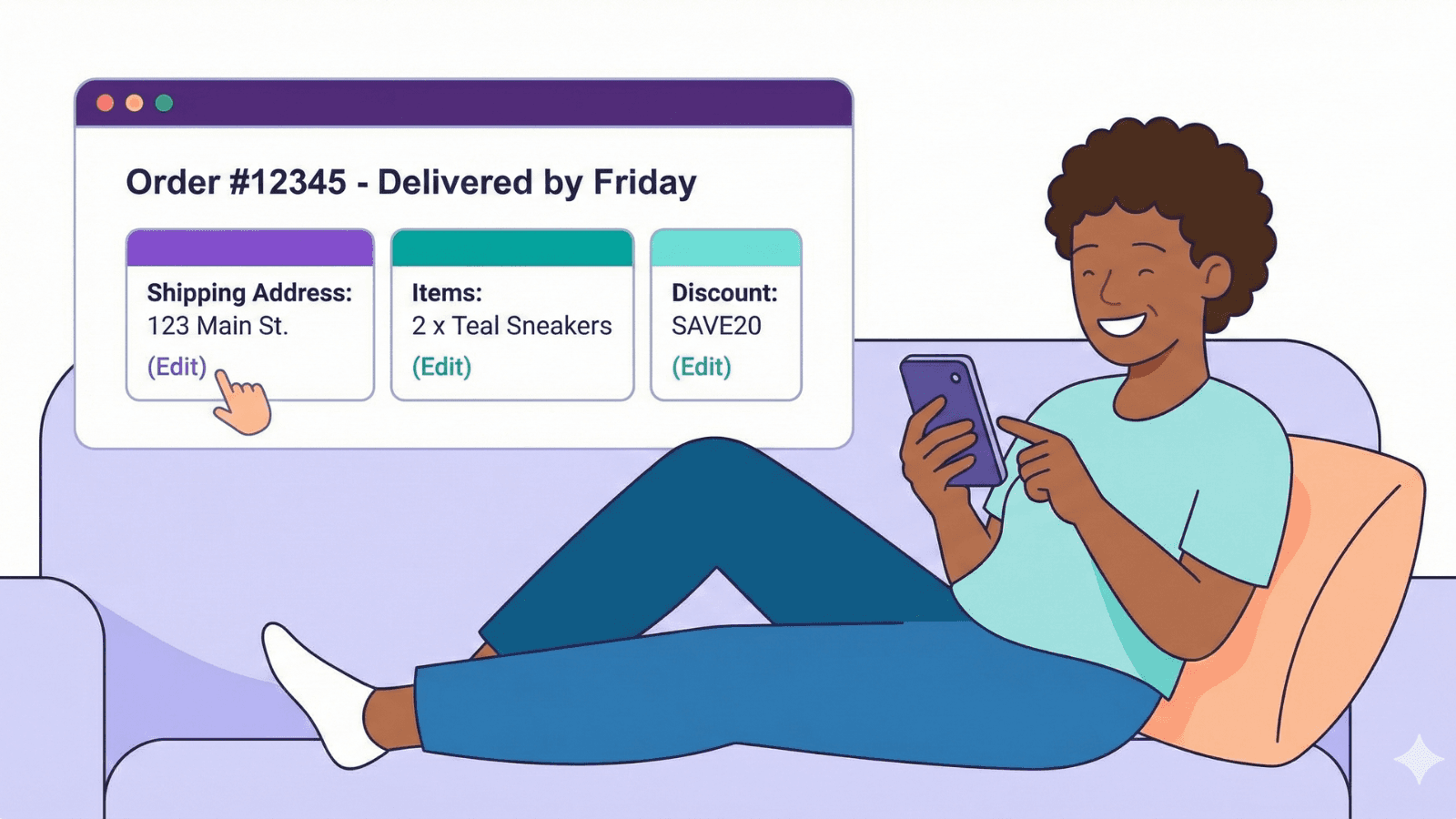
Revize solves this by letting customers edit their own orders.
Customers access a self-service portal from their order confirmation page. They can:
Change shipping address
Swap product variants (size, color)
Add or remove items
Apply discount codes they forgot at checkout
Cancel orders (if you allow it)
The edit flows through Shopify's native order system, keeping the same order number and maintaining accurate reporting.
Key features:
Self-service order editing portal
Post-purchase discount application
Address change before fulfillment
Product variant swaps
Configurable edit windows
Works with subscription orders (unique capability)
Email upsells
Real results:
40-60% reduction in order-related support tickets
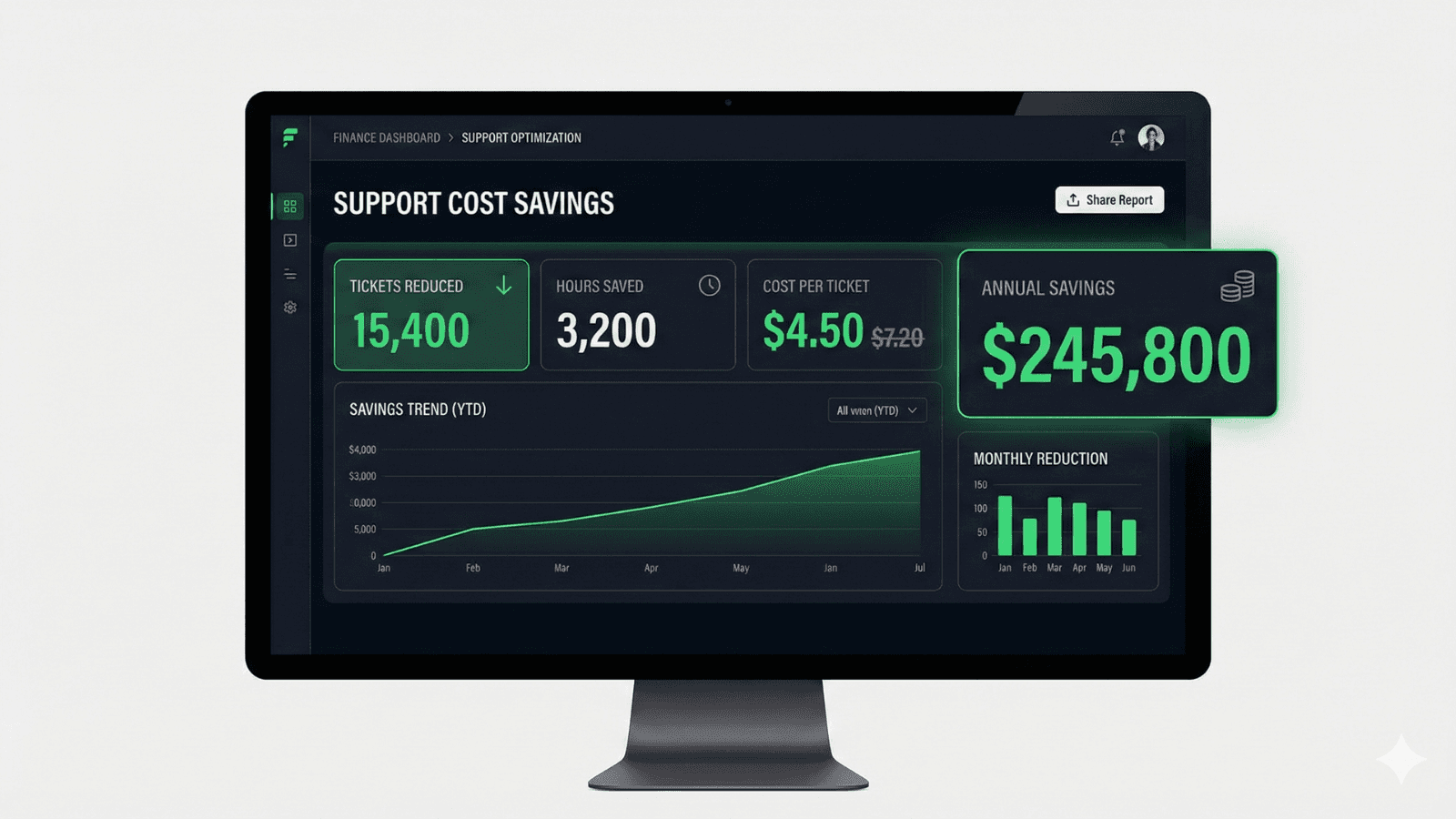
$1,500-3,000/month saved in support costs for mid-size stores
Customer satisfaction increase (instant resolution vs. waiting for agent)
Pricing: Free plan available, and paid plans from $29/month for unlimited edits and advanced features.
Best for: Any Shopify store dealing with order editing request, or for stores that want to make their customer buying experience unforgettable. Essential for high-volume stores and BFCM preparation.
Why it matters: This is the only app that lets customers apply discount codes after checkout - a massive pain point that traditional helpdesks can't solve elegantly.
2. Shopify Inbox — Best Free Option
Shopify Inbox is Shopify's native live chat and messaging solution. It's completely free and integrates directly with your store.
Key features:
Live chat widget
Facebook Messenger integration
Product recommendations in chat
Automated responses for common questions
Mobile app for on-the-go responses
Pricing: Free
Best for: New stores wanting basic chat functionality without any cost.
Limitation: Limited to chat and Messenger. No email ticketing, no self-service automation.
3. HelpCenter — Best for FAQ Builders
HelpCenter combines a basic helpdesk with a powerful FAQ builder. If your support team answers the same questions repeatedly, a well-built FAQ can deflect 20-30% of tickets.
Key features:
FAQ builder with search functionality
Basic helpdesk (email, chat, Messenger)
Product page tabs for shipping/sizing info
AI-powered article generation
Pricing: Free plan available. Paid plans from $5.99/month.
Best for: Stores that need a strong FAQ/knowledge base to deflect common questions.
Limitation: Helpdesk functionality is basic compared to Gorgias or Zendesk.
4. AfterShip Order Tracking — Best for Tracking Inquiries
"Where is my order?" is one of the most common support requests. AfterShip provides branded tracking pages and proactive notifications that answer this question before customers ask.
Key features:
Branded tracking pages
Automated shipping notifications
Estimated delivery predictions
Multi-carrier support
Pricing: Free plan available. Paid plans from $11/month.
Best for: Reducing WISMO (Where Is My Order) support tickets.
Limitation: Only addresses tracking inquiries. Doesn't help with other ticket categories.
5. Loop Returns — Best for Returns Management
If returns are a significant portion of your support tickets, a dedicated returns app like Loop Returns can reduce that load significantly.
Key features:
Self-service returns portal
Exchange for different products
Store credit options
Return shipping label generation
Pricing: Free Checkout+ plan available; paid plans from $155/month.
Best for: Stores with high return rates wanting to streamline the process.
The #1 Support Ticket Category (And How to Eliminate It)
Let's break down what actually creates support tickets for Shopify stores:
Ticket Category | % of Total Tickets | Can Automate? |
|---|---|---|
Order modifications/ edits | 25-35% | ✅ Yes (Revize) |
Where is my order? | 20-30% | ✅ Yes (AfterShip) |
Returns/exchanges | 15-20% | ✅ Yes (Loop) |
Product questions | 10-15% | ⚠️ Partial (FAQ) |
Complaints/issues | 10-15% | ❌ Needs agent |
Other | 5-10% | ❌ Needs agent |
The math is clear: 60-80% of support tickets can be automated or self-served.
Order modifications alone account for 25-35% of tickets. These are requests that:
Are completely predictable (address change, size swap, add discount)
Have straightforward solutions (just edit the order)
Don't actually need human judgment
Frustrate customers who have to wait for a simple change
Before self-service order editing, here's how merchants handled these:
Manual process:
Customer emails support
Agent receives ticket (1-24 hour delay)
Agent opens Shopify admin
Agent finds order
Agent makes change
Agent responds to customer
Customer receives confirmation
Time per ticket: 5-15 minutes
Customer experience: Frustrating (had to wait)
With self-service order editing:
Customer clicks "Edit Order" from confirmation page
Customer makes change
Done
Time per ticket: 0 minutes (no ticket created)
Customer experience: Delightful (instant resolution)
How to Choose the Right Customer Service Stack
Here's a simple framework for building your customer service stack:
Starter Stack (1-50 orders/day)
Budget: $0-50/month
Shopify Inbox (Free) - Basic live chat
HelpCenter (Free tier) - FAQ builder
Revize (Free plan available) - Order editing self-service
This stack handles the basics while preventing common tickets.
Growth Stack (50-200 orders/day)
Budget: $100-300/month
This stack centralizes support while preventing 50%+ of routine tickets.
Scale Stack (200+ orders/day)
Budget: $500+/month
Revize - Order editing self-service
AfterShip - Tracking
Loop Returns - Returns management
HelpCenter - FAQ/knowledge base
This stack handles volume while maximizing automation.
BFCM Emergency Stack
Already drowning in tickets? Here's the fastest ROI:
Install Revize immediately - Prevents 25-35% of tickets from day one
Set up AfterShip tracking page - Reduces WISMO tickets
Create FAQ for top 10 questions - Deflects common inquiries
You can implement all three in a single day. The ticket reduction starts immediately.
ROI Calculator: What Support Tickets Actually Cost
Let's do the math on support costs:
Assumptions:
Average support ticket takes 10 minutes to resolve
Support agent costs $20/hour fully loaded
Cost per ticket: $3.33
Scenario: 1,000 order store
Typical ticket rate: 10% of orders
Monthly tickets: 100
Monthly support cost: $333
After implementing self-service:
Ticket reduction: 50%
Monthly tickets: 50
Monthly support cost: $167
Monthly savings: $166
Scenario: 10,000 order store
Typical ticket rate: 10% of orders
Monthly tickets: 1,000
Monthly support cost: $3,330
After implementing self-service:
Ticket reduction: 50%
Monthly tickets: 500
Monthly support cost: $1,665
Monthly savings: $1,665
BFCM impact (3-4x normal volume):
For a 10,000 order store during BFCM month:
Projected tickets without self-service: 3,500
Projected tickets with self-service: 1,750
BFCM savings: $5,828
Plus the intangible benefits:
Faster response times for complex issues (agents aren't buried in routine tickets)
Higher customer satisfaction (instant self-service resolution)
Lower agent burnout during peak periods
Better conversion (customers who can self-serve don't abandon purchases)
Complete Comparison Table {#comparison-table}
App | Category | Best For | Starting Price | Shopify Rating |
|---|---|---|---|---|
Gorgias | Helpdesk | Native Shopify integration | $10/mo | 4.3★ |
Zendesk | Helpdesk | Enterprise scale | $55/agent/mo | 4.0★ |
Tidio | Helpdesk | Budget stores | Free | 4.7★ |
Richpanel | Helpdesk | Self-service portal | $29/mo | 4.8★ |
Re:amaze | Helpdesk | Multi-channel | $29/user/mo | 4.7★ |
Revize | Prevention | Order editing | Free | 5.0★ |
Shopify Inbox | Prevention | Free live chat | Free | N/A |
HelpCenter | Prevention | FAQ builder | Free | 4.8★ |
AfterShip | Prevention | Tracking | Free | 4.4★ |
Loop Returns | Prevention | Returns | Free | 4.6★ |
FAQ: Shopify Customer Service Apps
What is the best customer service app for Shopify?
It depends on your needs. For helpdesk functionality, Gorgias offers the best Shopify integration. For ticket prevention (which has better ROI for most stores), Revize eliminates order modification tickets while AfterShip handles tracking inquiries.
How can I reduce support tickets during BFCM?
Focus on ticket prevention:
Install self-service order editing (Revize) to handle modification requests
Set up branded tracking pages (AfterShip) to reduce WISMO tickets
Create an FAQ covering your top 10 questions
Enable post-purchase discount application so customers don't email about forgotten codes
Is Gorgias worth it for small Shopify stores?
For stores under 50 orders/day, Gorgias may be overkill. Start with Shopify Inbox (free) + ticket prevention apps. Move to Gorgias when ticket volume justifies the cost.
Can I use multiple customer service apps together?
Yes, and you should. The best strategy combines a helpdesk (for unavoidable tickets) with ticket prevention tools (for automatable requests). They serve different purposes.
What's the difference between a helpdesk and self-service?
Helpdesks manage tickets after they're created. Self-service prevents tickets from being created in the first place. Both have value, but self-service typically has better ROI since it reduces costs while improving customer experience.
How do I handle order changes without a support agent?
Use an order editing app like Revize. Customers access a self-service portal from their order confirmation page and can change address, swap sizes, add items, or apply forgotten discount codes—without creating a support ticket.
What percentage of support tickets can be automated?
Industry data suggests 60-80% of e-commerce support tickets fall into automatable categories: order modifications (25-35%), tracking inquiries (20-30%), returns/exchanges (15-20%), and FAQ-answerable questions (10-15%).
How much does customer service cost per order?
The industry average is $3-15 per support ticket. With a 10% ticket rate, that's $0.30-1.50 per order. Reducing ticket rates to 5% through self-service cuts this in half.
Should I hire support agents or invest in apps for BFCM?
Apps scale instantly while agents take 2-3 weeks to train. For BFCM, ticket prevention apps provide immediate relief. Use agents for complex issues that truly require human judgment.
Can customers add discount codes after checkout?
Not natively in Shopify. However, with Revize, customers can apply discount codes after checkout through the self-service portal. The order total adjusts automatically and the difference is refunded.
Conclusion
Customer service for Shopify isn't just about helpdesks anymore.
The best-performing stores in 2025 use a two-layer approach:
Ticket prevention (Revize, AfterShip, HelpCenter) to eliminate routine requests before they become tickets
Helpdesk (Gorgias, Zendesk, Tidio) to handle complex issues that truly need human attention
The ROI is clear:
50-60% reduction in support tickets
$1,000-5,000+/month in support cost savings
Better customer experience (instant self-service vs. waiting)
Lower agent burnout during peak periods
With BFCM around the corner, now is the time to implement these tools. The ticket reduction starts immediately.
Start with the highest-impact change: Order modification requests account for 25-35% of support tickets. Enable self-service order editing and watch that category disappear.
Ready to Reduce Support Tickets?
Revize enables self-service order editing for Shopify stores. Customers can change addresses, swap sizes, add items, and apply discount codes—without contacting support.
40-60% reduction in order-related tickets
Works during the edit window you define
Keeps the same order number
Supports subscription orders
Related Resources
The best Shopify customer service apps in 2025 fall into two categories:
Helpdesks (for managing tickets):
Gorgias - Best for Shopify-native integration
Zendesk - Best for enterprise scale
Tidio - Best for budget stores
Richpanel - Best for self-service portals
Ticket Prevention (for reducing tickets):
Revize - Best for order editing self-service
Shopify Inbox - Best free option
HelpCenter - Best for FAQ builders
AfterShip - Best for tracking inquiries
The smartest approach: Use both. A helpdesk handles unavoidable tickets while self-service tools prevent the rest.
Table of Contents
Why Customer Service Apps Matter (Especially During BFCM)
The Two Types of Customer Service Apps
Best Helpdesk Apps for Shopify
Best Ticket Prevention Apps for Shopify
The #1 Support Ticket Category
How to Choose the Right Customer Service Stack
ROI Calculator: What Support Tickets Actually Cost
Complete Comparison Table
FAQ
Why Customer Service Apps Matter (Especially During BFCM)
Here's a number that keeps Shopify merchants up at night: 67% of customers will leave a brand after just one bad support experience.
Now multiply that by Black Friday Cyber Monday volume.
During BFCM, the average Shopify store sees a 3-4x spike in support tickets. The usual culprits:
"Where is my order?" (tracking inquiries)
"I need to change my shipping address" (order modifications)
"I forgot to add my discount code" (post-purchase requests)
"Wrong size/color, need to exchange" (order changes)
"How do I return this?" (returns inquiries)
Most merchants respond by hiring seasonal support staff. But here's the problem: new agents take 2-3 weeks to train properly. By the time they're effective, BFCM is over.
The smarter solution? Reduce ticket volume in the first place.
This is where the right customer service stack makes all the difference. The best Shopify stores don't just have great helpdesks—they prevent 40-60% of tickets from being created at all.
The Two Types of Customer Service Apps
Customer service apps fall into two distinct categories:
Category 1: Helpdesks (Ticket Management)
Helpdesks are the traditional customer service solution. They:
Centralize conversations from email, chat, social, and phone
Assign tickets to agents
Track response times and SLA metrics
Provide macros and templates for common responses
When you need a helpdesk: When tickets are unavoidable (complex issues, complaints, custom requests).
The limitation: Helpdesks manage tickets, they don't prevent them. You're still paying agents to handle every inquiry.
Category 2: Ticket Prevention (Self-Service)
Ticket prevention apps let customers solve their own problems. They:
Enable order modifications/ order edits without contacting support
Provide instant answers through FAQ builders
Automate tracking updates
Allow self-service returns and exchanges
When you need ticket prevention: When the same repetitive requests drain your support team.
The advantage: Customers get instant resolution (better experience) while you save on support costs (better margins).
The winning strategy: Use both. A helpdesk catches what falls through the cracks. Ticket prevention ensures fewer things fall through in the first place.
Best Helpdesk Apps for Shopify
1. Gorgias
Best for: Shopify-native integration
Gorgias was built specifically for e-commerce and Shopify. That shows in its deep integration—agents can view order history, issue refunds, cancel orders, and edit customer information without leaving the helpdesk.
Key features:
Direct Shopify order actions (refund, cancel, duplicate)
AI-powered intent detection and auto-responses
Revenue attribution to support conversations
Unified inbox across email, chat, social, SMS, and voice
Pricing: From $10/month (50 tickets) to around $900/month (5,000 tickets), plus enterprise plans.
Best for: Mid-size to large Shopify stores that want the deepest native integration.
Limitation: Pricing scales with ticket volume. High-volume stores pay premium prices.
2. Zendesk
Best for: Enterprise scale and customization
Zendesk is the industry leader in customer service platforms. It handles massive scale and offers virtually unlimited customization through its marketplace of 1,000+ apps.
Key features:
Supports every channel (email, chat, social, voice, text)
Advanced AI agents that resolve issues autonomously
Highly customizable workflows
Robust analytics and reporting
Pricing: From $55/agent/month for Suite Team (billed annually), up to $169+/agent/month for Suite Enterprise, with additional AI and add-ons at extra cost
Best for: Enterprise Shopify Plus stores needing advanced customization.
Limitation: Can be overkill for smaller stores. The Shopify integration isn't as deep as Gorgias.
3. Tidio
Best for: Budget-conscious stores
Tidio offers live chat, chatbots, and email management in a single affordable package. Its AI chatbot can handle common questions automatically, reducing the load on human agents.
Key features:
Live chat with AI-powered chatbots
Email ticketing system
Visitor tracking and analytics
Pre-built chatbot templates
Pricing: Free plan available. Paid plans start around $24–29/month for up to 100 billable conversations, with growth and enterprise plans from ~$59/month to $749+/month.
Best for: Small stores wanting basic multi-channel support without enterprise pricing.
Limitation: Less sophisticated than Gorgias or Zendesk for complex workflows.
4. Richpanel
Best for: Self-service portals
Richpanel combines a helpdesk with a unique self-service portal. Customers can track orders, request returns, and even cancel orders without creating a ticket.
Key features:
Self-service portal for common actions
Unified inbox across all channels
AI-powered response drafting
Mobile apps for on-the-go support
Pricing: Helpdesk plans from $29/user/month, with higher tiers and self-service portal plans going up to around $600/month depending on volume.
Best for: Stores wanting helpdesk + self-service in one platform.
Limitation: Self-service features are limited to basic order actions.
5. Re:amaze
Best for: Multi-channel support
Re:amaze offers a solid all-in-one solution with email, chat, social, SMS, and voice support. It includes a knowledge base builder and FAQ functionality.
Key features:
Multi-channel inbox
Live chat with chatbots
FAQ and knowledge base builder
Shopify order management integration
Pricing: From $29/user/month (Basic) to $69/user/month (Plus), with a $59/month starter volume plan and custom enterprise options.
Best for: Growing stores needing robust multi-channel support.
Best Ticket Prevention Apps for Shopify
Here's where the real ROI lives. Every ticket prevented is money saved, and a customer who got instant resolution instead of waiting.
1. Revize — Best for Order Editing Self-Service
The #1 support ticket category for Shopify stores? Order modification requests.
"Can I change my shipping address?"
"I ordered the wrong size"
"Can I add something to my order?"
"I forgot my discount code"
These requests hit your inbox constantly. Each one takes 5-15 minutes of agent time. During BFCM, they can overwhelm your entire support team.
Revize solves this by letting customers edit their own orders.
Customers access a self-service portal from their order confirmation page. They can:
Change shipping address
Swap product variants (size, color)
Add or remove items
Apply discount codes they forgot at checkout
Cancel orders (if you allow it)
The edit flows through Shopify's native order system, keeping the same order number and maintaining accurate reporting.
Key features:
Self-service order editing portal
Post-purchase discount application
Address change before fulfillment
Product variant swaps
Configurable edit windows
Works with subscription orders (unique capability)
Email upsells
Real results:
40-60% reduction in order-related support tickets
$1,500-3,000/month saved in support costs for mid-size stores
Customer satisfaction increase (instant resolution vs. waiting for agent)
Pricing: Free plan available, and paid plans from $29/month for unlimited edits and advanced features.
Best for: Any Shopify store dealing with order editing request, or for stores that want to make their customer buying experience unforgettable. Essential for high-volume stores and BFCM preparation.
Why it matters: This is the only app that lets customers apply discount codes after checkout - a massive pain point that traditional helpdesks can't solve elegantly.
2. Shopify Inbox — Best Free Option
Shopify Inbox is Shopify's native live chat and messaging solution. It's completely free and integrates directly with your store.
Key features:
Live chat widget
Facebook Messenger integration
Product recommendations in chat
Automated responses for common questions
Mobile app for on-the-go responses
Pricing: Free
Best for: New stores wanting basic chat functionality without any cost.
Limitation: Limited to chat and Messenger. No email ticketing, no self-service automation.
3. HelpCenter — Best for FAQ Builders
HelpCenter combines a basic helpdesk with a powerful FAQ builder. If your support team answers the same questions repeatedly, a well-built FAQ can deflect 20-30% of tickets.
Key features:
FAQ builder with search functionality
Basic helpdesk (email, chat, Messenger)
Product page tabs for shipping/sizing info
AI-powered article generation
Pricing: Free plan available. Paid plans from $5.99/month.
Best for: Stores that need a strong FAQ/knowledge base to deflect common questions.
Limitation: Helpdesk functionality is basic compared to Gorgias or Zendesk.
4. AfterShip Order Tracking — Best for Tracking Inquiries
"Where is my order?" is one of the most common support requests. AfterShip provides branded tracking pages and proactive notifications that answer this question before customers ask.
Key features:
Branded tracking pages
Automated shipping notifications
Estimated delivery predictions
Multi-carrier support
Pricing: Free plan available. Paid plans from $11/month.
Best for: Reducing WISMO (Where Is My Order) support tickets.
Limitation: Only addresses tracking inquiries. Doesn't help with other ticket categories.
5. Loop Returns — Best for Returns Management
If returns are a significant portion of your support tickets, a dedicated returns app like Loop Returns can reduce that load significantly.
Key features:
Self-service returns portal
Exchange for different products
Store credit options
Return shipping label generation
Pricing: Free Checkout+ plan available; paid plans from $155/month.
Best for: Stores with high return rates wanting to streamline the process.
The #1 Support Ticket Category (And How to Eliminate It)
Let's break down what actually creates support tickets for Shopify stores:
Ticket Category | % of Total Tickets | Can Automate? |
|---|---|---|
Order modifications/ edits | 25-35% | ✅ Yes (Revize) |
Where is my order? | 20-30% | ✅ Yes (AfterShip) |
Returns/exchanges | 15-20% | ✅ Yes (Loop) |
Product questions | 10-15% | ⚠️ Partial (FAQ) |
Complaints/issues | 10-15% | ❌ Needs agent |
Other | 5-10% | ❌ Needs agent |
The math is clear: 60-80% of support tickets can be automated or self-served.
Order modifications alone account for 25-35% of tickets. These are requests that:
Are completely predictable (address change, size swap, add discount)
Have straightforward solutions (just edit the order)
Don't actually need human judgment
Frustrate customers who have to wait for a simple change
Before self-service order editing, here's how merchants handled these:
Manual process:
Customer emails support
Agent receives ticket (1-24 hour delay)
Agent opens Shopify admin
Agent finds order
Agent makes change
Agent responds to customer
Customer receives confirmation
Time per ticket: 5-15 minutes
Customer experience: Frustrating (had to wait)
With self-service order editing:
Customer clicks "Edit Order" from confirmation page
Customer makes change
Done
Time per ticket: 0 minutes (no ticket created)
Customer experience: Delightful (instant resolution)
How to Choose the Right Customer Service Stack
Here's a simple framework for building your customer service stack:
Starter Stack (1-50 orders/day)
Budget: $0-50/month
Shopify Inbox (Free) - Basic live chat
HelpCenter (Free tier) - FAQ builder
Revize (Free plan available) - Order editing self-service
This stack handles the basics while preventing common tickets.
Growth Stack (50-200 orders/day)
Budget: $100-300/month
This stack centralizes support while preventing 50%+ of routine tickets.
Scale Stack (200+ orders/day)
Budget: $500+/month
Revize - Order editing self-service
AfterShip - Tracking
Loop Returns - Returns management
HelpCenter - FAQ/knowledge base
This stack handles volume while maximizing automation.
BFCM Emergency Stack
Already drowning in tickets? Here's the fastest ROI:
Install Revize immediately - Prevents 25-35% of tickets from day one
Set up AfterShip tracking page - Reduces WISMO tickets
Create FAQ for top 10 questions - Deflects common inquiries
You can implement all three in a single day. The ticket reduction starts immediately.
ROI Calculator: What Support Tickets Actually Cost
Let's do the math on support costs:
Assumptions:
Average support ticket takes 10 minutes to resolve
Support agent costs $20/hour fully loaded
Cost per ticket: $3.33
Scenario: 1,000 order store
Typical ticket rate: 10% of orders
Monthly tickets: 100
Monthly support cost: $333
After implementing self-service:
Ticket reduction: 50%
Monthly tickets: 50
Monthly support cost: $167
Monthly savings: $166
Scenario: 10,000 order store
Typical ticket rate: 10% of orders
Monthly tickets: 1,000
Monthly support cost: $3,330
After implementing self-service:
Ticket reduction: 50%
Monthly tickets: 500
Monthly support cost: $1,665
Monthly savings: $1,665
BFCM impact (3-4x normal volume):
For a 10,000 order store during BFCM month:
Projected tickets without self-service: 3,500
Projected tickets with self-service: 1,750
BFCM savings: $5,828
Plus the intangible benefits:
Faster response times for complex issues (agents aren't buried in routine tickets)
Higher customer satisfaction (instant self-service resolution)
Lower agent burnout during peak periods
Better conversion (customers who can self-serve don't abandon purchases)
Complete Comparison Table {#comparison-table}
App | Category | Best For | Starting Price | Shopify Rating |
|---|---|---|---|---|
Gorgias | Helpdesk | Native Shopify integration | $10/mo | 4.3★ |
Zendesk | Helpdesk | Enterprise scale | $55/agent/mo | 4.0★ |
Tidio | Helpdesk | Budget stores | Free | 4.7★ |
Richpanel | Helpdesk | Self-service portal | $29/mo | 4.8★ |
Re:amaze | Helpdesk | Multi-channel | $29/user/mo | 4.7★ |
Revize | Prevention | Order editing | Free | 5.0★ |
Shopify Inbox | Prevention | Free live chat | Free | N/A |
HelpCenter | Prevention | FAQ builder | Free | 4.8★ |
AfterShip | Prevention | Tracking | Free | 4.4★ |
Loop Returns | Prevention | Returns | Free | 4.6★ |
FAQ: Shopify Customer Service Apps
What is the best customer service app for Shopify?
It depends on your needs. For helpdesk functionality, Gorgias offers the best Shopify integration. For ticket prevention (which has better ROI for most stores), Revize eliminates order modification tickets while AfterShip handles tracking inquiries.
How can I reduce support tickets during BFCM?
Focus on ticket prevention:
Install self-service order editing (Revize) to handle modification requests
Set up branded tracking pages (AfterShip) to reduce WISMO tickets
Create an FAQ covering your top 10 questions
Enable post-purchase discount application so customers don't email about forgotten codes
Is Gorgias worth it for small Shopify stores?
For stores under 50 orders/day, Gorgias may be overkill. Start with Shopify Inbox (free) + ticket prevention apps. Move to Gorgias when ticket volume justifies the cost.
Can I use multiple customer service apps together?
Yes, and you should. The best strategy combines a helpdesk (for unavoidable tickets) with ticket prevention tools (for automatable requests). They serve different purposes.
What's the difference between a helpdesk and self-service?
Helpdesks manage tickets after they're created. Self-service prevents tickets from being created in the first place. Both have value, but self-service typically has better ROI since it reduces costs while improving customer experience.
How do I handle order changes without a support agent?
Use an order editing app like Revize. Customers access a self-service portal from their order confirmation page and can change address, swap sizes, add items, or apply forgotten discount codes—without creating a support ticket.
What percentage of support tickets can be automated?
Industry data suggests 60-80% of e-commerce support tickets fall into automatable categories: order modifications (25-35%), tracking inquiries (20-30%), returns/exchanges (15-20%), and FAQ-answerable questions (10-15%).
How much does customer service cost per order?
The industry average is $3-15 per support ticket. With a 10% ticket rate, that's $0.30-1.50 per order. Reducing ticket rates to 5% through self-service cuts this in half.
Should I hire support agents or invest in apps for BFCM?
Apps scale instantly while agents take 2-3 weeks to train. For BFCM, ticket prevention apps provide immediate relief. Use agents for complex issues that truly require human judgment.
Can customers add discount codes after checkout?
Not natively in Shopify. However, with Revize, customers can apply discount codes after checkout through the self-service portal. The order total adjusts automatically and the difference is refunded.
Conclusion
Customer service for Shopify isn't just about helpdesks anymore.
The best-performing stores in 2025 use a two-layer approach:
Ticket prevention (Revize, AfterShip, HelpCenter) to eliminate routine requests before they become tickets
Helpdesk (Gorgias, Zendesk, Tidio) to handle complex issues that truly need human attention
The ROI is clear:
50-60% reduction in support tickets
$1,000-5,000+/month in support cost savings
Better customer experience (instant self-service vs. waiting)
Lower agent burnout during peak periods
With BFCM around the corner, now is the time to implement these tools. The ticket reduction starts immediately.
Start with the highest-impact change: Order modification requests account for 25-35% of support tickets. Enable self-service order editing and watch that category disappear.
Ready to Reduce Support Tickets?
Revize enables self-service order editing for Shopify stores. Customers can change addresses, swap sizes, add items, and apply discount codes—without contacting support.
40-60% reduction in order-related tickets
Works during the edit window you define
Keeps the same order number
Supports subscription orders
Related Resources
Revize your Shopify store. Lead with customer experience.

© Copyright 2024, All Rights Reserved
Revize your Shopify store. Lead with customer experience.
© Copyright 2024, All Rights Reserved
Revize your Shopify store. Lead with customer experience.
© Copyright 2024, All Rights Reserved
Revize your Shopify store. Lead with customer experience.
© Copyright 2024, All Rights Reserved