
Shopify UCP in 2026: What the Commerce Protocol Unlocks
Shopify UCP in 2026: What the Commerce Protocol Unlocks
Shopify UCP in 2026: What the Commerce Protocol Unlocks

The future of commerce just got a universal language. Here's everything you need to understand it.
The Big Picture: What Just Happened?
On January 11, 2026, at the National Retail Federation (NRF) conference in New York, Google CEO Sundar Pichai announced something that will fundamentally reshape how we build e-commerce experiences.
The Universal Commerce Protocol (UCP) — co-developed by Shopify and Google, with backing from Walmart, Target, Etsy, Wayfair, and 20+ other major players — is now live.
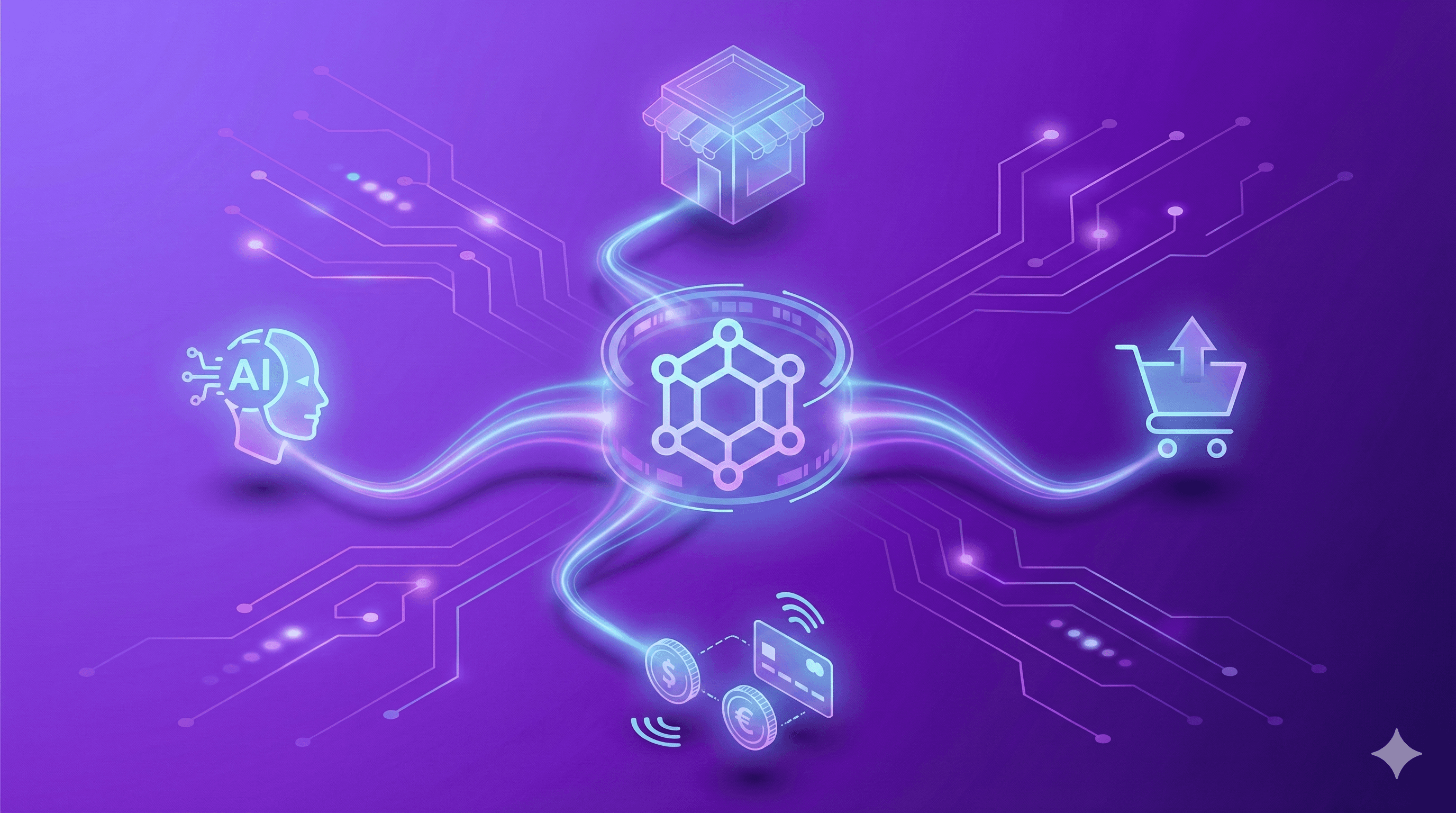
This isn't just another API announcement. This is the emergence of a shared language for AI-powered commerce.
Think about what HTTP did for the web. UCP aims to do the same for agentic commerce — establishing the foundational protocol that lets AI agents discover products, negotiate checkout terms, and complete purchases across any merchant, any platform, any AI surface.
If you're building Shopify apps, running an agency, or developing any commerce technology — this changes your roadmap. Let's break it down.
What Exactly is UCP?
The Universal Commerce Protocol is an open-source standard that defines how AI agents and commerce systems communicate throughout the entire shopping journey — from discovery to checkout to post-purchase support.
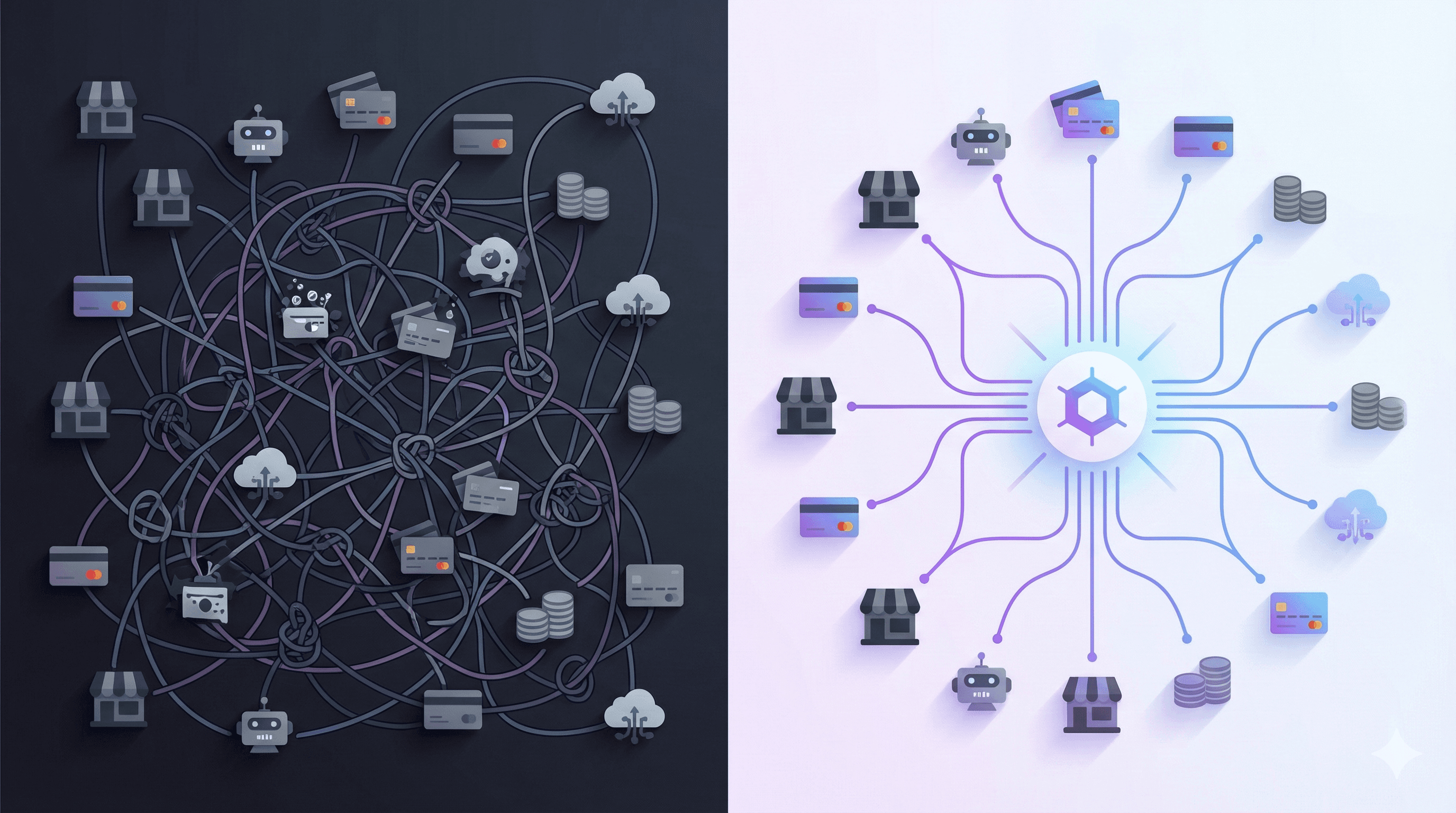
Before UCP, if you wanted an AI assistant to buy something on behalf of a user, you'd need custom integrations for every single merchant. Every retailer. Every checkout system. It was an N×N nightmare of complexity that made scaling agentic commerce practically impossible.
UCP solves this with a simple but powerful idea: one protocol to rule them all.
The Four Actors in the UCP Ecosystem
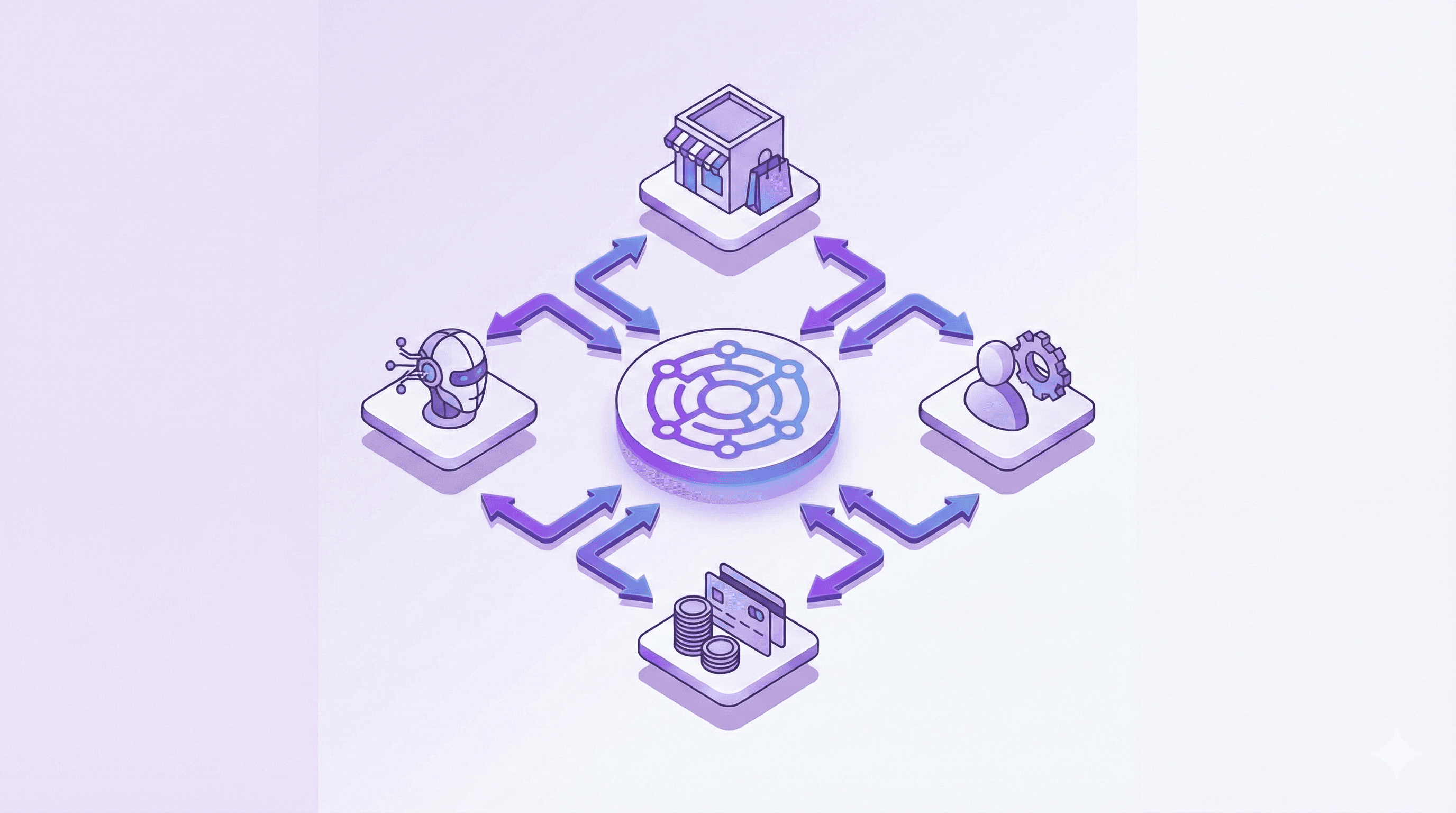
UCP defines clear roles for everyone involved:
1. Platforms (Agents & Applications) These are the AI surfaces where users interact — Google's AI Mode, Gemini app, ChatGPT, Microsoft Copilot, or any agentic application. They discover products, build carts, and orchestrate purchases on behalf of users.
2. Businesses (Merchants) The retailers and brands selling products. They remain the Merchant of Record, maintaining full control over their customer relationships, pricing, and checkout logic.
3. Credential Providers Payment processors like Google Pay, Shop Pay, PayPal, Stripe — anyone who handles the tokenization and secure transmission of payment credentials.
4. Payment Service Providers (PSPs) The backend systems that actually capture funds and settle transactions.
This separation of concerns is what makes UCP work. Each actor has clear responsibilities, and the protocol defines exactly how they communicate.
The Problem: Why Commerce Needed a Protocol
Here's the reality of commerce today: it's incredibly fragmented.
Consider what happens when a customer wants to buy something through an AI assistant:
The AI needs to discover the product across millions of merchants
It needs to understand availability, pricing, and shipping options in real-time
It must handle loyalty programs, discount codes, and subscription preferences
It has to collect payment information securely
It needs to complete checkout with all the merchant's specific requirements
Finally, it must support order tracking, returns, and customer service
Before UCP, an AI platform would need to build bespoke integrations with every single merchant to do this. Google would need one integration for Nike, another for Walmart, another for a small Shopify merchant selling handmade candles.
That's thousands of custom integrations. It doesn't scale.
UCP collapses this N×N problem into a single integration point. Implement UCP once, and your commerce system can work with any UCP-compatible agent. Build an agent that speaks UCP, and it can transact with any UCP-compatible merchant.
That's the unlock.
UCP's Three Core Capabilities
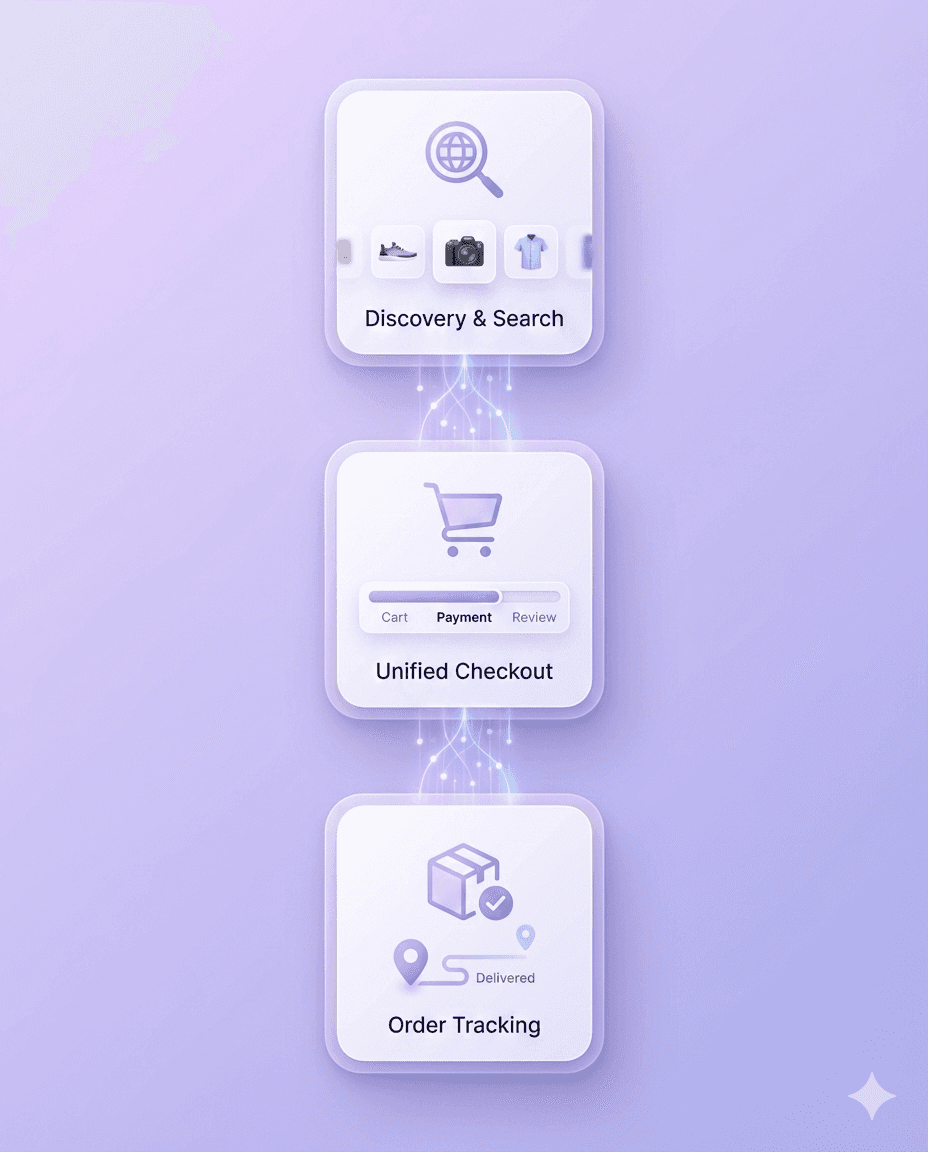
The initial UCP release focuses on three foundational capabilities that cover the essential commerce lifecycle:
1. Checkout
This is the heart of UCP. The checkout capability enables agents to:
Create and manage checkout sessions
Add line items with proper pricing
Apply discount codes and loyalty credentials
Collect buyer information (shipping address, contact details)
Attach payment information via secure handlers
Complete purchases with confirmation
The checkout flow is built for negotiation. A merchant declares what they need (delivery date selection, size confirmation, pre-order acknowledgment), and the agent knows exactly what to collect before finalizing.
2. Identity Linking
This capability uses OAuth 2.0 to connect a user's identity across platforms. When a customer's AI assistant knows their loyalty program credentials, shipping preferences, and payment methods, the checkout experience becomes truly frictionless.
Identity linking means:
Automatic loyalty rewards application
Saved shipping addresses
Remembered preferences (gift wrapping, delivery instructions)
Personalized pricing for members
3. Order Management
Post-purchase isn't an afterthought in UCP. The order management capability provides:
Real-time fulfillment tracking
Order modification requests
Return and refund initiation
Customer service handoff
For apps like Revize that focus on post-purchase experiences, this is huge. UCP standardizes how agents can request order modifications — creating a direct pipeline for self-service post-checkout changes.
The Technical Architecture: Built to Evolve
Shopify's engineering team described their philosophy perfectly: "Monolithic protocols eventually collapse under complexity. Thoughtfully layered protocols survive and thrive."
UCP is designed with this in mind. Here's how the layers work:
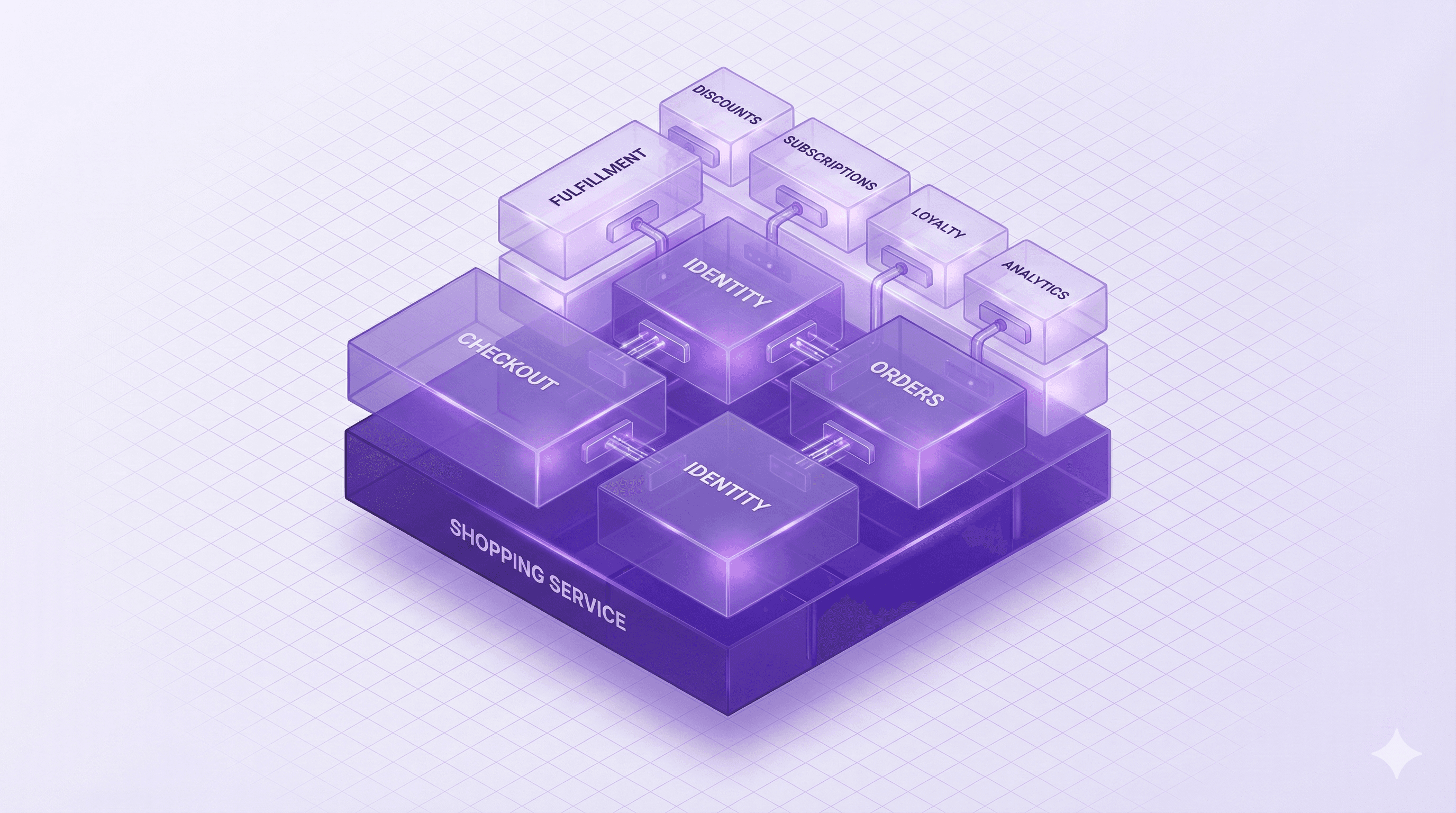
Layer 1: Shopping Service
The foundational layer defines core transaction primitives:
Checkout sessions
Line items
Totals and pricing
Status messages
Standard error handling
Layer 2: Capabilities
Major functional areas that businesses implement:
dev.ucp.shopping.checkout— Core checkout flowdev.ucp.shopping.orders— Order lifecycle managementdev.ucp.shopping.catalog— Product discovery
Each capability is independently versioned. Shopify can release Checkout v2 without touching Orders.
Layer 3: Extensions
Domain-specific schemas that augment capabilities:
dev.ucp.shopping.fulfillment— Shipping, pickup, delivery windowsdev.ucp.shopping.discount— Discount code applicationdev.ucp.shopping.subscription— Recurring billing cadencesdev.ucp.shopping.ap2_mandate— Cryptographic authorization for autonomous transactions
Extensions are compositional. A merchant can support fulfillment negotiation without implementing subscriptions. An agent can handle discounts even if the merchant doesn't support loyalty linking.
This architecture means UCP can evolve without breaking existing implementations. New capabilities and extensions can be added as commerce needs change.
Built for Interoperability
UCP doesn't exist in isolation. It's designed to work seamlessly with the existing protocol ecosystem:
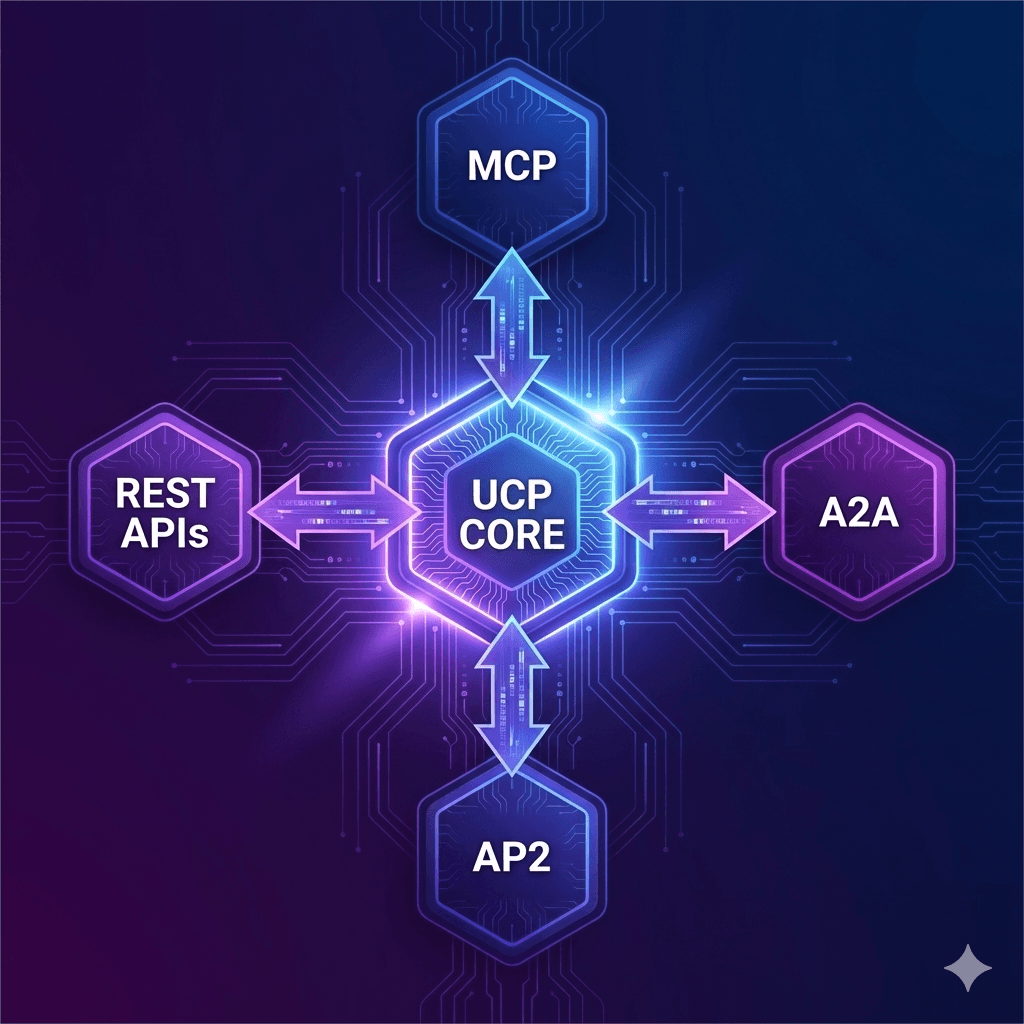
Model Context Protocol (MCP)
Anthropic's MCP defines how AI models interact with external tools. UCP can be exposed via MCP tools, allowing Claude and other LLMs to call UCP capabilities directly.
Shopify already provides MCP servers that implement UCP capabilities for discovery, checkout, and orders.
Agent2Agent (A2A)
Google's A2A protocol enables communication between AI agents. UCP rides on top of A2A when agents need to coordinate — for example, a shopping agent working with a customer service agent.
Agent Payments Protocol (AP2)
Also from Google, AP2 handles the payment-level semantics of agentic transactions. UCP integrates with AP2 for secure, cryptographically-verified payment authorization.
When an agent needs to complete a purchase autonomously (without real-time user confirmation), the dev.ucp.shopping.ap2_mandate extension provides non-repudiable proof of user consent.
REST and JSON-RPC
For businesses that want straightforward integration, UCP works over standard REST APIs. No fancy transport requirements. Just HTTP and JSON.
What This Means for Shopify Merchants
If you're a Shopify merchant, here's the immediate impact:
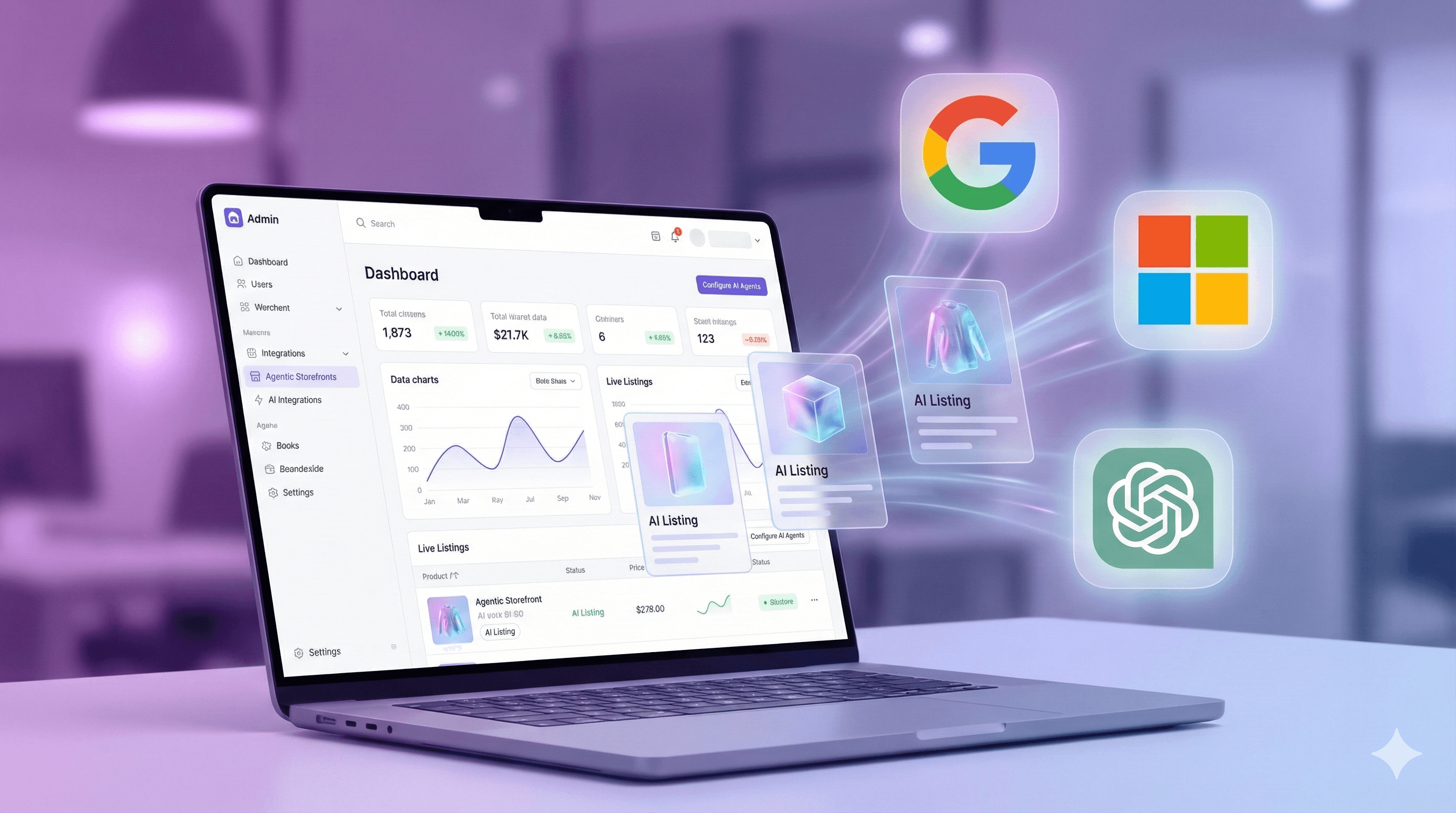
Sell on AI Surfaces
Shopify is rolling out native shopping experiences on:
Google AI Mode (in Search)
Gemini App
Microsoft Copilot (via Copilot Checkout)
ChatGPT (via existing integration)
All managed from one place: Agentic Storefronts in your Shopify Admin.
You remain the Merchant of Record. Your checkout logic. Your pricing. Your customer relationship. UCP just expands where customers can find and buy from you.
Shopify Catalog Opens to Everyone
Shopify Catalog — the product database that makes items discoverable in AI tools — is now available to all brands through the new Agentic plan. Even if you're not on Shopify for your storefront, you can use Shopify's infrastructure to list in AI channels.
Direct Offers Integration
Google's new Direct Offers pilot lets merchants present exclusive discounts to high-intent shoppers directly in AI Mode. If someone is researching "best carry-on luggage," your 20% off deal can appear right there, in the conversation.
Shopify merchants are already in the pilot alongside brands like Petco, e.l.f. Cosmetics, and Samsonite.
What This Means for Shopify App Developers
This is where it gets exciting for the developer community.
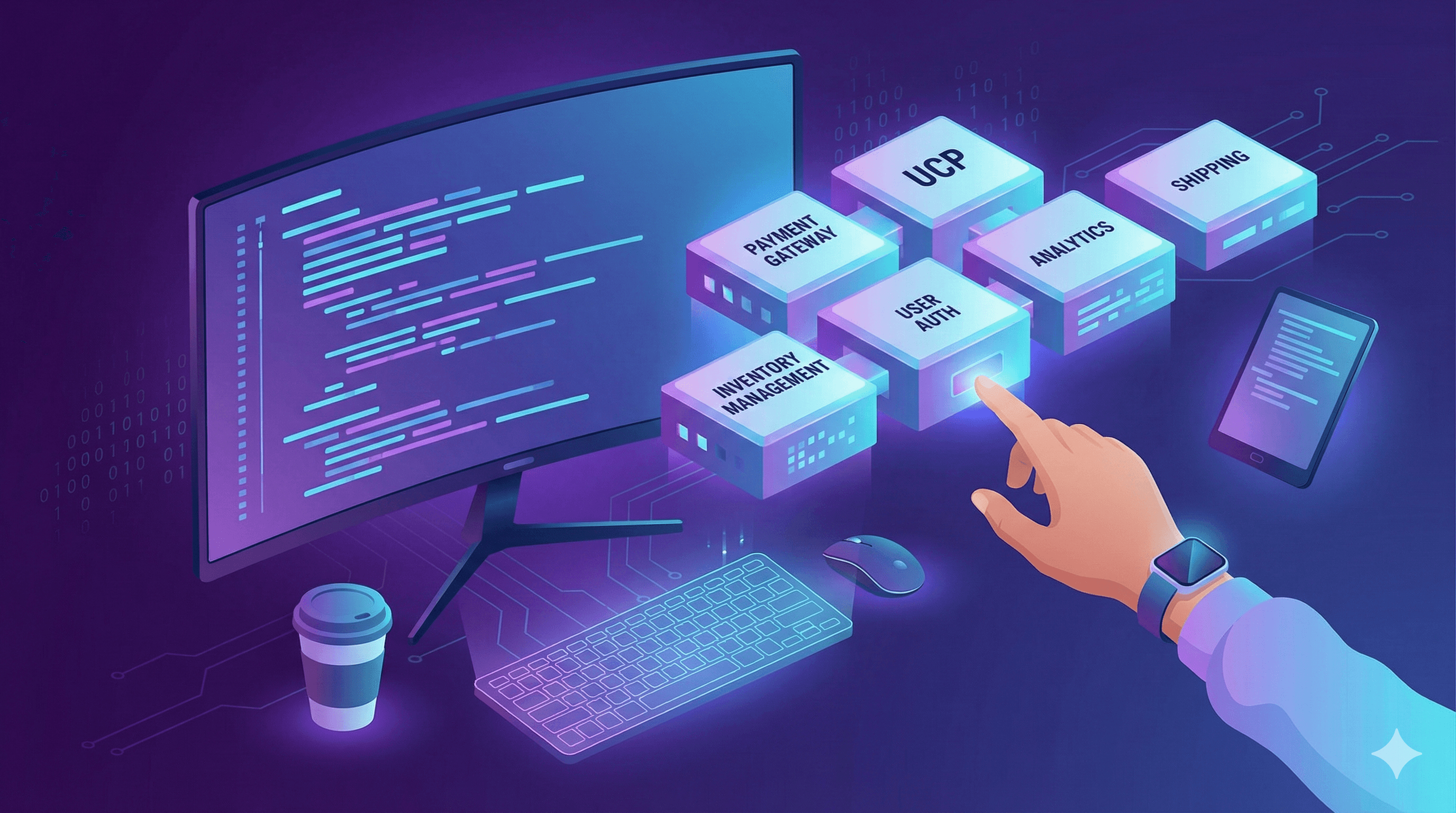
Your Apps Can Become Agent-Accessible
Think about what your app does. Now imagine an AI agent being able to call that functionality.
Order editing app? An agent could request order modifications through a standardized interface.
Subscription management? Agents can negotiate billing cadences using the subscription extension.
Loyalty programs? Identity linking means agents can automatically apply rewards.
Fulfillment solutions? The fulfillment extension defines how agents negotiate delivery options.
UCP's extension model means you can define your own capabilities and expose them to the agentic ecosystem.
Building UCP-Compatible Features
The UCP specification is open source on GitHub. Here's how to start:
Read the Spec: Visit ucp.dev for full documentation
Explore the Samples: Reference implementations in Python and TypeScript are available
Try the Playground: ucp.dev/playground offers interactive demos
Use the SDKs: Native SDKs help you implement faster
The Order Management Opportunity
For post-purchase apps specifically, UCP's Order Management capability is a direct integration path. The protocol defines:
How agents request order status
How fulfillment events are communicated
How modifications (address changes, item swaps) can be requested
How returns and refunds flow
If you're building in this space, UCP compliance should be on your roadmap.
What This Means for Agencies
If you're an agency serving Shopify merchants, UCP represents a significant service expansion opportunity.

New Service Lines
Agentic Commerce Readiness Audits Evaluate whether a merchant's product data, checkout flows, and fulfillment logic are ready for AI surfaces.
Shopify Catalog Optimization Help merchants structure their product metadata for discoverability across AI platforms. This is SEO for the agent era.
UCP Integration Consulting For enterprise clients building custom commerce experiences, guide their UCP implementation strategy.
AI Channel Strategy Advise on which AI surfaces make sense for different brands and how to optimize presence across them.
The Discovery Problem Becomes an Opportunity
Here's the thing about agentic commerce: AI agents don't browse. They don't window shop. They answer questions and complete tasks.
This means product discoverability becomes a data problem. Merchants need:
Rich, structured product metadata
Answers to common product questions
Compatibility information
Substitute recommendations
Google is adding dozens of new data attributes in Merchant Center specifically for this. Agencies that help merchants populate this data well will win.
UCP vs. ACP: Understanding the Protocol Landscape
UCP isn't the only agentic commerce protocol in town. OpenAI and Stripe launched the Agentic Commerce Protocol (ACP) in September 2025.
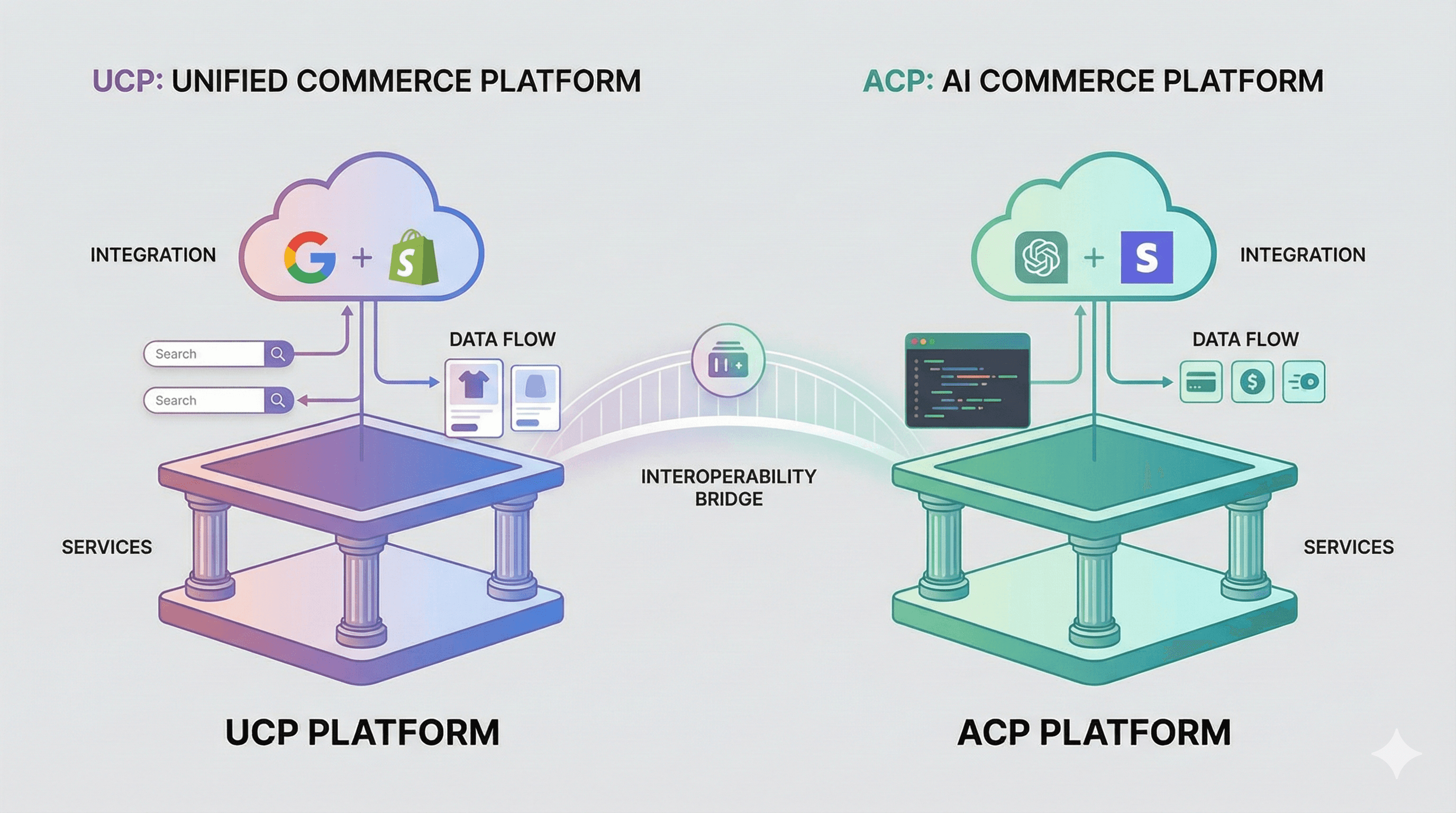
Here's how they compare:
Aspect | UCP (Google/Shopify) | ACP (OpenAI/Stripe) |
|---|---|---|
Primary Backers | Google, Shopify, Walmart, Target, Etsy | OpenAI, Stripe |
Focus | Full commerce journey (discovery → checkout → post-purchase) | Checkout and transaction flows |
Payment Flexibility | Any processor, any wallet | Stripe-centric (with expansion) |
Merchant Support | 20+ major retailers + Shopify ecosystem | Etsy initially, Shopify planned |
Transport Options | REST, MCP, A2A, GraphQL | REST, MCP |
The Key Difference
UCP takes a broader view. It's not just about checkout — it defines how agents and merchants interact across all commerce surfaces and stages.
ACP focuses more narrowly on standardizing the transaction flow.
Both are open source. Both aim for interoperability. The ecosystem will likely support both, with merchants implementing capabilities for each based on which AI platforms they want to reach.
Getting Started: A Practical Implementation Guide
Ready to make your Shopify app or merchant experience UCP-compatible? Here's your roadmap.
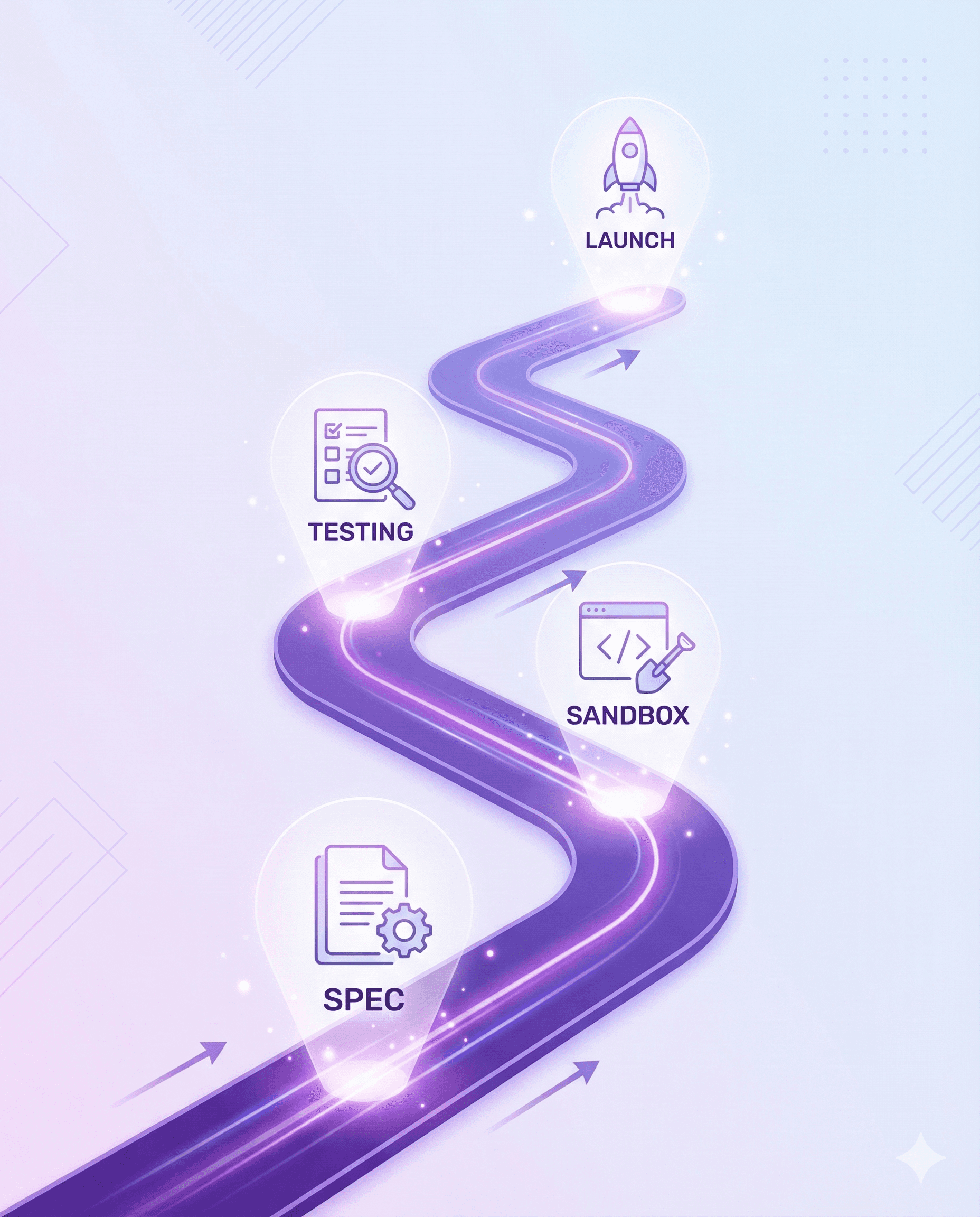
Step 1: Understand Your Role
Are you a:
Platform building an agent that shops?
Business exposing checkout capabilities?
Payment provider handling credential flows?
Your implementation path differs based on your role. Most Shopify developers will be implementing from the Business perspective — exposing capabilities that agents can call.
Step 2: Review the Specification
The UCP spec lives at:
Documentation: ucp.dev/specification
GitHub: github.com/Universal-Commerce-Protocol/ucp
Key sections to understand:
Capability Discovery
Checkout Session Lifecycle
Payment Handler Negotiation
Extension Composition
Step 3: Start with the Samples
Shopify and Google provide reference implementations at github.com/Universal-Commerce-Protocol/samples
The Python sample demonstrates:
Capability discovery
Checkout session management
Payment processing
Order lifecycle
Step 4: Implement Core Capabilities
For most apps, start with:
Profile Endpoint: Declare what capabilities you support
Checkout Sessions: Create, update, and complete transactions
Webhooks: Notify platforms of order status changes
Step 5: Add Relevant Extensions
Based on your app's function:
Fulfillment apps →
dev.ucp.shopping.fulfillmentDiscount/promo apps →
dev.ucp.shopping.discountSubscription apps →
dev.ucp.shopping.subscription
Step 6: Test with the Playground
ucp.dev/playground lets you simulate agent interactions against your implementation before going live.
What's Coming Next
UCP is just getting started. Here's what the roadmap includes:
New Verticals
While retail is the initial focus, UCP is designed to expand to:
Travel bookings
Service reservations
Digital goods
Food & restaurant orders
The protocol's extension model makes vertical expansion relatively straightforward.
Enhanced Capabilities
Coming soon:
Multi-item carts: Complex baskets with cross-merchant fulfillment
Loyalty program management: Standardized points, rewards, and benefits
Post-purchase support: Tracking, returns, customer service handoffs
Personalization signals: Enhanced product discovery based on user context
Regional Expansion
Initial rollout is U.S.-focused, but UCP is being adapted for:
Regional payment methods
Local regulatory compliance
Market-specific commerce patterns
The Bottom Line
The Universal Commerce Protocol isn't just a technical specification. It's a bet on how commerce will work in an AI-first world.
Here's what we know:
For Merchants: The path to selling on AI surfaces just got dramatically simpler. Shopify is making this accessible through Agentic Storefronts — one admin to manage presence across Google, Microsoft, ChatGPT, and more.
For App Developers: Your apps can become part of the agentic commerce stack. UCP's extension model means you can expose your functionality to AI agents in a standardized way. Start with the spec. Build with the samples. Ship something.
For Agencies: A new category of services is emerging. Agentic commerce readiness, catalog optimization, AI channel strategy — these are real opportunities for differentiation.
The companies backing UCP — Google, Shopify, Walmart, Target, Visa, Mastercard, Stripe, and 20+ others — aren't placing small bets. They're building the infrastructure for the next era of commerce.
The question isn't whether agentic commerce is coming. It's whether you'll be ready when it does.

Resources
UCP Official Site: ucp.dev
GitHub Repository: github.com/Universal-Commerce-Protocol/ucp
Shopify Agentic Docs: shopify.dev/docs/agents
Google UCP Guide: developers.google.com/merchant/ucp
Sample Implementations: github.com/Universal-Commerce-Protocol/samples
This article is part of our "Beyond the Checkout" series, exploring the technologies shaping the future of e-commerce. At Revize, we help Shopify merchants transform their post-purchase experience with intelligent order editing. As the commerce landscape evolves toward AI-driven interactions, we're committed to staying at the forefront — and bringing our merchants along with us.
The future of commerce just got a universal language. Here's everything you need to understand it.
The Big Picture: What Just Happened?
On January 11, 2026, at the National Retail Federation (NRF) conference in New York, Google CEO Sundar Pichai announced something that will fundamentally reshape how we build e-commerce experiences.
The Universal Commerce Protocol (UCP) — co-developed by Shopify and Google, with backing from Walmart, Target, Etsy, Wayfair, and 20+ other major players — is now live.
This isn't just another API announcement. This is the emergence of a shared language for AI-powered commerce.
Think about what HTTP did for the web. UCP aims to do the same for agentic commerce — establishing the foundational protocol that lets AI agents discover products, negotiate checkout terms, and complete purchases across any merchant, any platform, any AI surface.
If you're building Shopify apps, running an agency, or developing any commerce technology — this changes your roadmap. Let's break it down.
What Exactly is UCP?
The Universal Commerce Protocol is an open-source standard that defines how AI agents and commerce systems communicate throughout the entire shopping journey — from discovery to checkout to post-purchase support.
Before UCP, if you wanted an AI assistant to buy something on behalf of a user, you'd need custom integrations for every single merchant. Every retailer. Every checkout system. It was an N×N nightmare of complexity that made scaling agentic commerce practically impossible.
UCP solves this with a simple but powerful idea: one protocol to rule them all.
The Four Actors in the UCP Ecosystem
UCP defines clear roles for everyone involved:
1. Platforms (Agents & Applications) These are the AI surfaces where users interact — Google's AI Mode, Gemini app, ChatGPT, Microsoft Copilot, or any agentic application. They discover products, build carts, and orchestrate purchases on behalf of users.
2. Businesses (Merchants) The retailers and brands selling products. They remain the Merchant of Record, maintaining full control over their customer relationships, pricing, and checkout logic.
3. Credential Providers Payment processors like Google Pay, Shop Pay, PayPal, Stripe — anyone who handles the tokenization and secure transmission of payment credentials.
4. Payment Service Providers (PSPs) The backend systems that actually capture funds and settle transactions.
This separation of concerns is what makes UCP work. Each actor has clear responsibilities, and the protocol defines exactly how they communicate.
The Problem: Why Commerce Needed a Protocol
Here's the reality of commerce today: it's incredibly fragmented.
Consider what happens when a customer wants to buy something through an AI assistant:
The AI needs to discover the product across millions of merchants
It needs to understand availability, pricing, and shipping options in real-time
It must handle loyalty programs, discount codes, and subscription preferences
It has to collect payment information securely
It needs to complete checkout with all the merchant's specific requirements
Finally, it must support order tracking, returns, and customer service
Before UCP, an AI platform would need to build bespoke integrations with every single merchant to do this. Google would need one integration for Nike, another for Walmart, another for a small Shopify merchant selling handmade candles.
That's thousands of custom integrations. It doesn't scale.
UCP collapses this N×N problem into a single integration point. Implement UCP once, and your commerce system can work with any UCP-compatible agent. Build an agent that speaks UCP, and it can transact with any UCP-compatible merchant.
That's the unlock.
UCP's Three Core Capabilities
The initial UCP release focuses on three foundational capabilities that cover the essential commerce lifecycle:
1. Checkout
This is the heart of UCP. The checkout capability enables agents to:
Create and manage checkout sessions
Add line items with proper pricing
Apply discount codes and loyalty credentials
Collect buyer information (shipping address, contact details)
Attach payment information via secure handlers
Complete purchases with confirmation
The checkout flow is built for negotiation. A merchant declares what they need (delivery date selection, size confirmation, pre-order acknowledgment), and the agent knows exactly what to collect before finalizing.
2. Identity Linking
This capability uses OAuth 2.0 to connect a user's identity across platforms. When a customer's AI assistant knows their loyalty program credentials, shipping preferences, and payment methods, the checkout experience becomes truly frictionless.
Identity linking means:
Automatic loyalty rewards application
Saved shipping addresses
Remembered preferences (gift wrapping, delivery instructions)
Personalized pricing for members
3. Order Management
Post-purchase isn't an afterthought in UCP. The order management capability provides:
Real-time fulfillment tracking
Order modification requests
Return and refund initiation
Customer service handoff
For apps like Revize that focus on post-purchase experiences, this is huge. UCP standardizes how agents can request order modifications — creating a direct pipeline for self-service post-checkout changes.
The Technical Architecture: Built to Evolve
Shopify's engineering team described their philosophy perfectly: "Monolithic protocols eventually collapse under complexity. Thoughtfully layered protocols survive and thrive."
UCP is designed with this in mind. Here's how the layers work:
Layer 1: Shopping Service
The foundational layer defines core transaction primitives:
Checkout sessions
Line items
Totals and pricing
Status messages
Standard error handling
Layer 2: Capabilities
Major functional areas that businesses implement:
dev.ucp.shopping.checkout— Core checkout flowdev.ucp.shopping.orders— Order lifecycle managementdev.ucp.shopping.catalog— Product discovery
Each capability is independently versioned. Shopify can release Checkout v2 without touching Orders.
Layer 3: Extensions
Domain-specific schemas that augment capabilities:
dev.ucp.shopping.fulfillment— Shipping, pickup, delivery windowsdev.ucp.shopping.discount— Discount code applicationdev.ucp.shopping.subscription— Recurring billing cadencesdev.ucp.shopping.ap2_mandate— Cryptographic authorization for autonomous transactions
Extensions are compositional. A merchant can support fulfillment negotiation without implementing subscriptions. An agent can handle discounts even if the merchant doesn't support loyalty linking.
This architecture means UCP can evolve without breaking existing implementations. New capabilities and extensions can be added as commerce needs change.
Built for Interoperability
UCP doesn't exist in isolation. It's designed to work seamlessly with the existing protocol ecosystem:
Model Context Protocol (MCP)
Anthropic's MCP defines how AI models interact with external tools. UCP can be exposed via MCP tools, allowing Claude and other LLMs to call UCP capabilities directly.
Shopify already provides MCP servers that implement UCP capabilities for discovery, checkout, and orders.
Agent2Agent (A2A)
Google's A2A protocol enables communication between AI agents. UCP rides on top of A2A when agents need to coordinate — for example, a shopping agent working with a customer service agent.
Agent Payments Protocol (AP2)
Also from Google, AP2 handles the payment-level semantics of agentic transactions. UCP integrates with AP2 for secure, cryptographically-verified payment authorization.
When an agent needs to complete a purchase autonomously (without real-time user confirmation), the dev.ucp.shopping.ap2_mandate extension provides non-repudiable proof of user consent.
REST and JSON-RPC
For businesses that want straightforward integration, UCP works over standard REST APIs. No fancy transport requirements. Just HTTP and JSON.
What This Means for Shopify Merchants
If you're a Shopify merchant, here's the immediate impact:
Sell on AI Surfaces
Shopify is rolling out native shopping experiences on:
Google AI Mode (in Search)
Gemini App
Microsoft Copilot (via Copilot Checkout)
ChatGPT (via existing integration)
All managed from one place: Agentic Storefronts in your Shopify Admin.
You remain the Merchant of Record. Your checkout logic. Your pricing. Your customer relationship. UCP just expands where customers can find and buy from you.
Shopify Catalog Opens to Everyone
Shopify Catalog — the product database that makes items discoverable in AI tools — is now available to all brands through the new Agentic plan. Even if you're not on Shopify for your storefront, you can use Shopify's infrastructure to list in AI channels.
Direct Offers Integration
Google's new Direct Offers pilot lets merchants present exclusive discounts to high-intent shoppers directly in AI Mode. If someone is researching "best carry-on luggage," your 20% off deal can appear right there, in the conversation.
Shopify merchants are already in the pilot alongside brands like Petco, e.l.f. Cosmetics, and Samsonite.
What This Means for Shopify App Developers
This is where it gets exciting for the developer community.
Your Apps Can Become Agent-Accessible
Think about what your app does. Now imagine an AI agent being able to call that functionality.
Order editing app? An agent could request order modifications through a standardized interface.
Subscription management? Agents can negotiate billing cadences using the subscription extension.
Loyalty programs? Identity linking means agents can automatically apply rewards.
Fulfillment solutions? The fulfillment extension defines how agents negotiate delivery options.
UCP's extension model means you can define your own capabilities and expose them to the agentic ecosystem.
Building UCP-Compatible Features
The UCP specification is open source on GitHub. Here's how to start:
Read the Spec: Visit ucp.dev for full documentation
Explore the Samples: Reference implementations in Python and TypeScript are available
Try the Playground: ucp.dev/playground offers interactive demos
Use the SDKs: Native SDKs help you implement faster
The Order Management Opportunity
For post-purchase apps specifically, UCP's Order Management capability is a direct integration path. The protocol defines:
How agents request order status
How fulfillment events are communicated
How modifications (address changes, item swaps) can be requested
How returns and refunds flow
If you're building in this space, UCP compliance should be on your roadmap.
What This Means for Agencies
If you're an agency serving Shopify merchants, UCP represents a significant service expansion opportunity.
New Service Lines
Agentic Commerce Readiness Audits Evaluate whether a merchant's product data, checkout flows, and fulfillment logic are ready for AI surfaces.
Shopify Catalog Optimization Help merchants structure their product metadata for discoverability across AI platforms. This is SEO for the agent era.
UCP Integration Consulting For enterprise clients building custom commerce experiences, guide their UCP implementation strategy.
AI Channel Strategy Advise on which AI surfaces make sense for different brands and how to optimize presence across them.
The Discovery Problem Becomes an Opportunity
Here's the thing about agentic commerce: AI agents don't browse. They don't window shop. They answer questions and complete tasks.
This means product discoverability becomes a data problem. Merchants need:
Rich, structured product metadata
Answers to common product questions
Compatibility information
Substitute recommendations
Google is adding dozens of new data attributes in Merchant Center specifically for this. Agencies that help merchants populate this data well will win.
UCP vs. ACP: Understanding the Protocol Landscape
UCP isn't the only agentic commerce protocol in town. OpenAI and Stripe launched the Agentic Commerce Protocol (ACP) in September 2025.
Here's how they compare:
Aspect | UCP (Google/Shopify) | ACP (OpenAI/Stripe) |
|---|---|---|
Primary Backers | Google, Shopify, Walmart, Target, Etsy | OpenAI, Stripe |
Focus | Full commerce journey (discovery → checkout → post-purchase) | Checkout and transaction flows |
Payment Flexibility | Any processor, any wallet | Stripe-centric (with expansion) |
Merchant Support | 20+ major retailers + Shopify ecosystem | Etsy initially, Shopify planned |
Transport Options | REST, MCP, A2A, GraphQL | REST, MCP |
The Key Difference
UCP takes a broader view. It's not just about checkout — it defines how agents and merchants interact across all commerce surfaces and stages.
ACP focuses more narrowly on standardizing the transaction flow.
Both are open source. Both aim for interoperability. The ecosystem will likely support both, with merchants implementing capabilities for each based on which AI platforms they want to reach.
Getting Started: A Practical Implementation Guide
Ready to make your Shopify app or merchant experience UCP-compatible? Here's your roadmap.
Step 1: Understand Your Role
Are you a:
Platform building an agent that shops?
Business exposing checkout capabilities?
Payment provider handling credential flows?
Your implementation path differs based on your role. Most Shopify developers will be implementing from the Business perspective — exposing capabilities that agents can call.
Step 2: Review the Specification
The UCP spec lives at:
Documentation: ucp.dev/specification
GitHub: github.com/Universal-Commerce-Protocol/ucp
Key sections to understand:
Capability Discovery
Checkout Session Lifecycle
Payment Handler Negotiation
Extension Composition
Step 3: Start with the Samples
Shopify and Google provide reference implementations at github.com/Universal-Commerce-Protocol/samples
The Python sample demonstrates:
Capability discovery
Checkout session management
Payment processing
Order lifecycle
Step 4: Implement Core Capabilities
For most apps, start with:
Profile Endpoint: Declare what capabilities you support
Checkout Sessions: Create, update, and complete transactions
Webhooks: Notify platforms of order status changes
Step 5: Add Relevant Extensions
Based on your app's function:
Fulfillment apps →
dev.ucp.shopping.fulfillmentDiscount/promo apps →
dev.ucp.shopping.discountSubscription apps →
dev.ucp.shopping.subscription
Step 6: Test with the Playground
ucp.dev/playground lets you simulate agent interactions against your implementation before going live.
What's Coming Next
UCP is just getting started. Here's what the roadmap includes:
New Verticals
While retail is the initial focus, UCP is designed to expand to:
Travel bookings
Service reservations
Digital goods
Food & restaurant orders
The protocol's extension model makes vertical expansion relatively straightforward.
Enhanced Capabilities
Coming soon:
Multi-item carts: Complex baskets with cross-merchant fulfillment
Loyalty program management: Standardized points, rewards, and benefits
Post-purchase support: Tracking, returns, customer service handoffs
Personalization signals: Enhanced product discovery based on user context
Regional Expansion
Initial rollout is U.S.-focused, but UCP is being adapted for:
Regional payment methods
Local regulatory compliance
Market-specific commerce patterns
The Bottom Line
The Universal Commerce Protocol isn't just a technical specification. It's a bet on how commerce will work in an AI-first world.
Here's what we know:
For Merchants: The path to selling on AI surfaces just got dramatically simpler. Shopify is making this accessible through Agentic Storefronts — one admin to manage presence across Google, Microsoft, ChatGPT, and more.
For App Developers: Your apps can become part of the agentic commerce stack. UCP's extension model means you can expose your functionality to AI agents in a standardized way. Start with the spec. Build with the samples. Ship something.
For Agencies: A new category of services is emerging. Agentic commerce readiness, catalog optimization, AI channel strategy — these are real opportunities for differentiation.
The companies backing UCP — Google, Shopify, Walmart, Target, Visa, Mastercard, Stripe, and 20+ others — aren't placing small bets. They're building the infrastructure for the next era of commerce.
The question isn't whether agentic commerce is coming. It's whether you'll be ready when it does.
Resources
UCP Official Site: ucp.dev
GitHub Repository: github.com/Universal-Commerce-Protocol/ucp
Shopify Agentic Docs: shopify.dev/docs/agents
Google UCP Guide: developers.google.com/merchant/ucp
Sample Implementations: github.com/Universal-Commerce-Protocol/samples
This article is part of our "Beyond the Checkout" series, exploring the technologies shaping the future of e-commerce. At Revize, we help Shopify merchants transform their post-purchase experience with intelligent order editing. As the commerce landscape evolves toward AI-driven interactions, we're committed to staying at the forefront — and bringing our merchants along with us.

Revize your Shopify store. Lead with customer experience.

© Copyright 2026, All Rights Reserved
Revize your Shopify store. Lead with customer experience.
© Copyright 2026, All Rights Reserved
Revize your Shopify store. Lead with customer experience.
© Copyright 2026, All Rights Reserved
Revize your Shopify store. Lead with customer experience.
© Copyright 2026, All Rights Reserved